A solar microgrid on the Blue Lake Rancheria in northern California. Blue Lake Rancheria
Flush with the success of their campaign for removing four Klamath River dams, a group of northern California tribes have set their sights on a different goal: creating reliable electricity, in local regions prone to electrical outages, and doing it in such a way that the Tribes control the power.
Their goal, simply put, is energy sovereignty.
The Tribal Energy Resilience and Sovereignty (TERAS) project, a solar microgrid project on an electrical circuit that splices through Yurok and Hoopa tribal lands, could signal a landmark intertribal effort to meet electricity demands for Indigenous homes and businesses in rural regions.
In collaboration with a third tribe, the Blue Lake Rancheria, TERAS would provide reliable renewable energy to thousands of people in the Hoopa Valley region, of whom perhaps 20 percent are tribal members. This project would also expand existing solar microgrids on Blue Lake Rancheria Tribal lands, which have so far met 15 percent of electricity demand in a disaster-prone region where floods or landslides can disrupt service.
“For the TERAS project, the goal is for this to be the demonstration and the proof of concept for a much bigger deployment,” with multiple tribes, says Matthew Marshall, the director of energy resilience and business development for the Blue Lake Rancheria Tribe.
Solar microgrids have the same basic components of larger systems that produce electricity from solar panels and batteries, but they can operate either within a larger grid or independently, serving a small-scale area. One such microgrid powers Alcatraz Island, the former prison site that is now a park in the San Francisco Bay. Another powers a set of EV charging stations in Davis, California.
The tribal microgrid project comes at a critical moment for the green energy transition, yet it is one of the few photovoltaic grids on reservations in the western United States intended to supply energy directly to the Indigenous community around it.
Tribes face a choice: build for their own use, or trade electrical power for other benefits
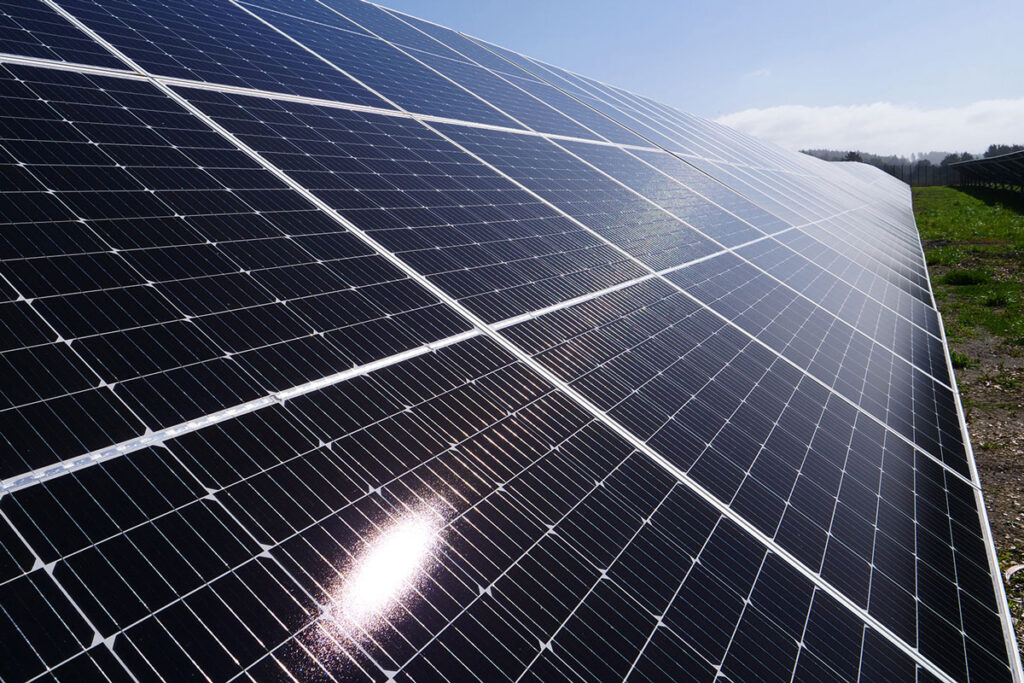
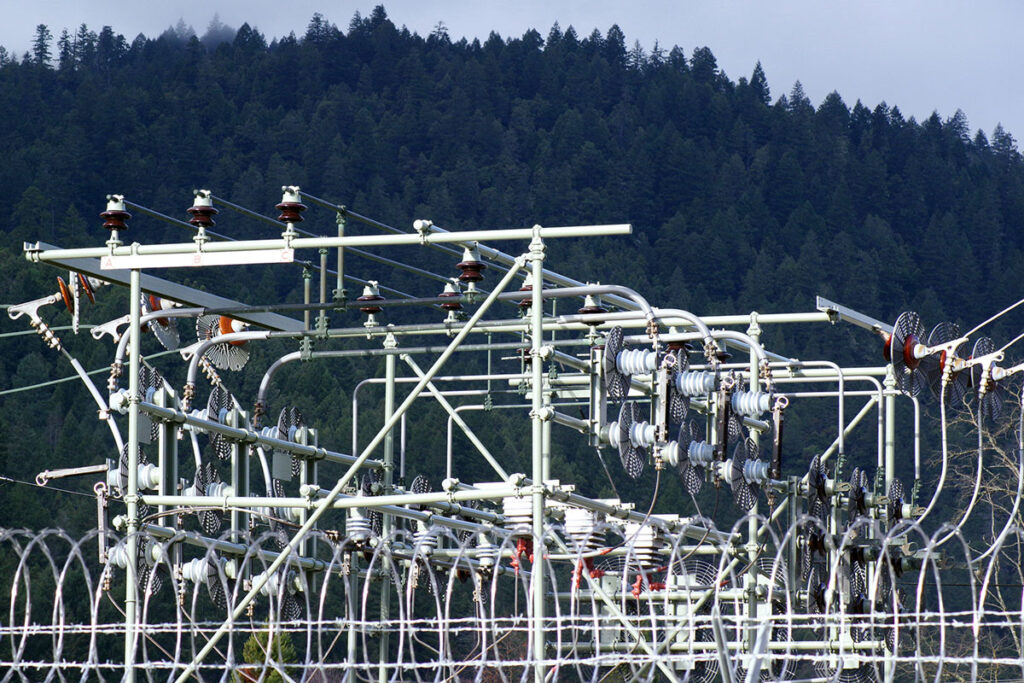
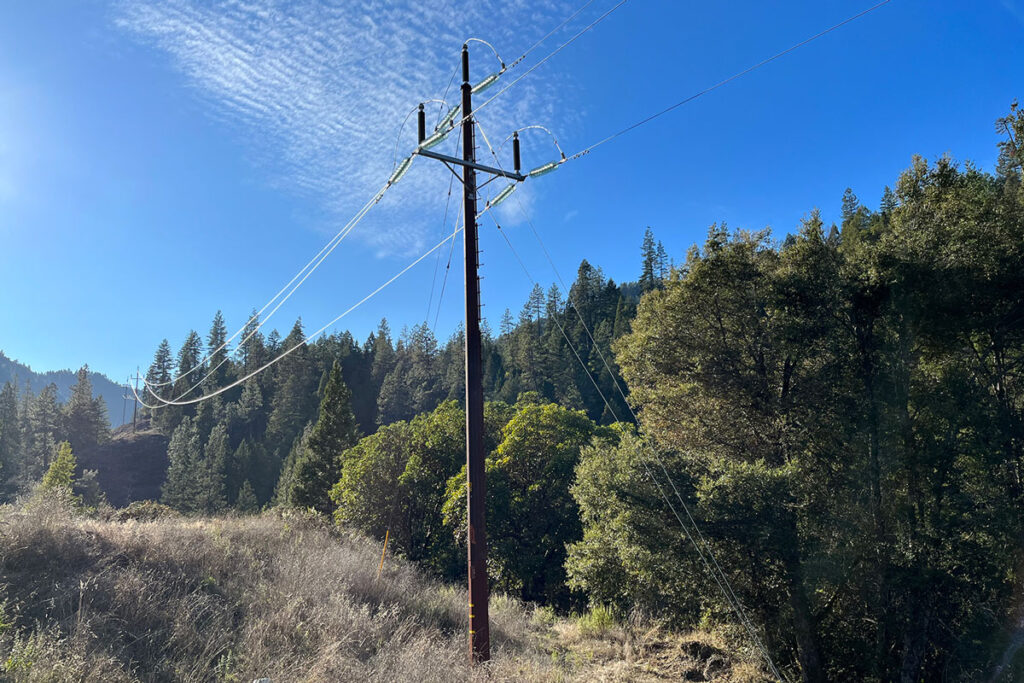
Community solar projects such as this, which operate and provide clean power locally, can be costly, time-intensive, and are not feasible in all terrains. Which is why some tribes, like the Moapa Paiutes in Nevada, choose instead to lease the land to a company that sells the electricity their solar panels generate to regional utilities.
Projects designed for non-tribal goals are common. “You can make the case that most solar built in the western United States is to meet investor-owned-utility and public-utility renewable energy targets,” says Dustin Mulvaney, a professor of environmental studies at San Jose State University who has worked on land use change and solar development projects since 2008.
So Indigenous leaders have a tough decision to consider when building renewable-energy development on their lands: secure electricity for tribal members for grid reliability and energy sovereignty, or sell electricity off-site for the tribe’s economic benefit in service of big utilities’ renewable energy goals? There is not a hard-and-fast guidebook.
In northern California, the development of the TERAS Project is focused on tribal energy needs, not outside revenue, building its structures based on the concepts used in the design of an existing Solar+ system on Blue Lake Rancheria tribal lands. The planned TERAS project will be located about 50 miles away.
That tribe has 100 acres in trust within the ancestral territory of the Wiyot People, just northeast of Humboldt Bay. The community microgrid system combines solar PV and battery storage technology to supply a combined 420 kilowatts of renewable energy for hotels, offices, casinos, an airport, and homes on the Rancheria during peak and non-peak solar hours. In the planned expanded system, smaller free-standing solar grids with battery storage would be nested within a larger, but still local power grid, the primary campus microgrid for the Blue Lake Rancheria Tribe.
These microgrids can run independently, if needed to supply local power in the case of an outage on the main grid, and even power a local portion of PG&E’s electrical circuit if needed. They serve a fueling station, Tribal government offices and an educational and outreach center. Having back-up energy options provides the Tribe with energy resilience.
Moreover, excess power generated by the system would be available for resale to one of California’s 25 public Community Choice Aggregation energy providers (CCA’s) that purchase power for local communities.
During the deployment of the multi-year project, technology now in use on the Rancheria will be scaled up to a roughly 100–mile circuit providing flexible solar microgrid infrastructure for the two partner Tribes in the northwest corner of California. Marshall notes the tribal leadership’s goal for the community: to become 100 percent decarbonized. This could position the Blue Lake Rancheria as a leader of energy sovereignty among Tribal Nations.
Taking this leap hasn’t come without risks. The key to the success of solar projects on the Rancheria, Marshall says, has been partnerships. The Schatz Energy Center at Cal Poly Humboldt has been a long-term collaborator with the Tribe, providing technical expertise to support the community in the deployment of solar infrastructure. The TERAS project is also receiving funding from an $88 million grant from the U.S. Department of Energy matched by money from the state and PG&E. . The Redwood Coast Energy Authority, a public Eureka-based renewable energy utility, is serving as an administrative partner for the grant.
Heidi Moore-Guynup, Blue Lake Rancheria’s director of tribal and government affairs, says that the Tribe is waiting for final notification of the federal grant award as the Trump administration conducts a review of renewable energy projects. “The Tribes are optimistic that their TERAS project fits into the DOE’s larger goals of increased resilience and achieving energy independence,” says Moore-Guynup. “If we are not successful in securing the funding, the partners will continue to move forward looking for other potential funding sources that may exist.”
Self-governed tribal projects in the southwest offer a model
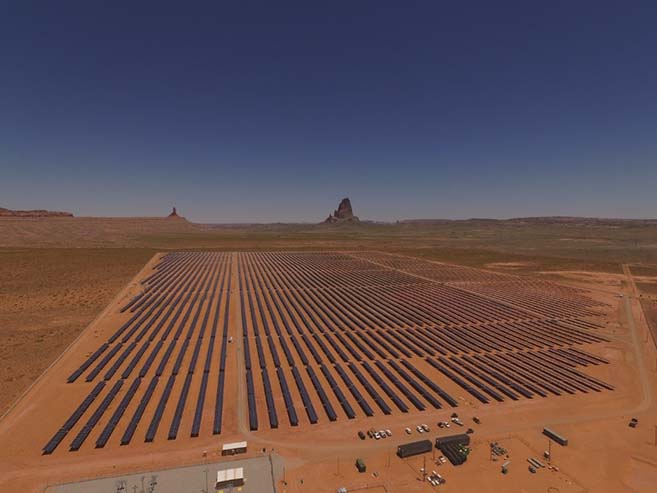
Different tribes have used different approaches. The larger solar facilities on the Navajo reservation perform both functions – about half of the output is sold to the Salt River Project, a nonprofit water and power utility in Arizona, and half provides power to tribal members.
The Navajo Nation’s Renewable Solar Program, announced in 2015, with its first two phases completed between 2017 and 2019, marked the first large-scale renewable energy development for the nation and, at 365 acres, is the largest solar farm to be self-governed by a tribe. The project was built by the Navajo Tribal Utility Authority (NTUA) — a Tribally-owned utility that serves the reservation — in partnership with the Salt River Project.
The program includes three operational solar facilities—the Kayenta I and Kayenta II Solar Farms in Arizona and the Red Mesa Tapaha Solar Farm in Utah. The Kaytena I and II farms, owned by NTUA, provide a combined 55 megawatts (MW) of solar power, according to Deenise Becenti, the government and public affairs manager for NTUA.
The electricity generated on-site is used for NTUA substations, which can then distribute the clean, local power to homes on NTUA’s grid. Sale of electricity from phases I and II of the Kayenta Solar Project generated an estimated $31.1 million for the Tribe, which supported the operation of community spaces and essential services, created a new energy workforce, and provided electrical service for about 36,000 homes since 2015.
The Red Mesa facility is designed to produced 72 megawatts of power, some of which will be used by local chapters of the reservation and some by 19 communities outside the Navajo nation, according to a press release from SOLV Energy, a contractor who worked with the engineering and construction of the facility.
Communities on the Navajo Reservation, with its vast canyons and variable, arid ecosystems, have historically lacked reliable access to electricity. Physical isolation from power grids, coupled with few incentives for local utilities to supply electricity across such a large region, posed barriers to electrification.
A 2023 Department of Energy report estimated that 21 percent of homes in the Navajo Nation lacked access to energy, a statistic that Andrew Curley, a tribal member who is an associate professor at the University of Arizona, reckons is an underestimate.
Commercial benefits are central to Nevada solar project
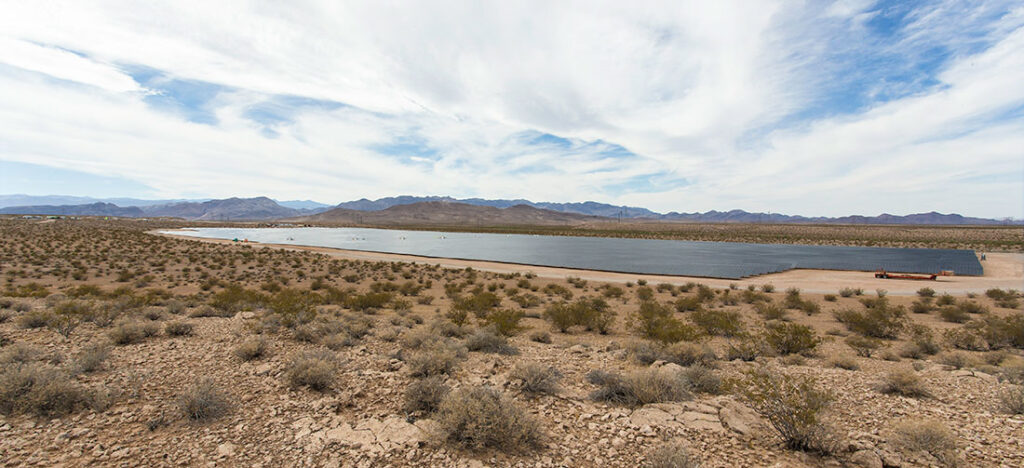
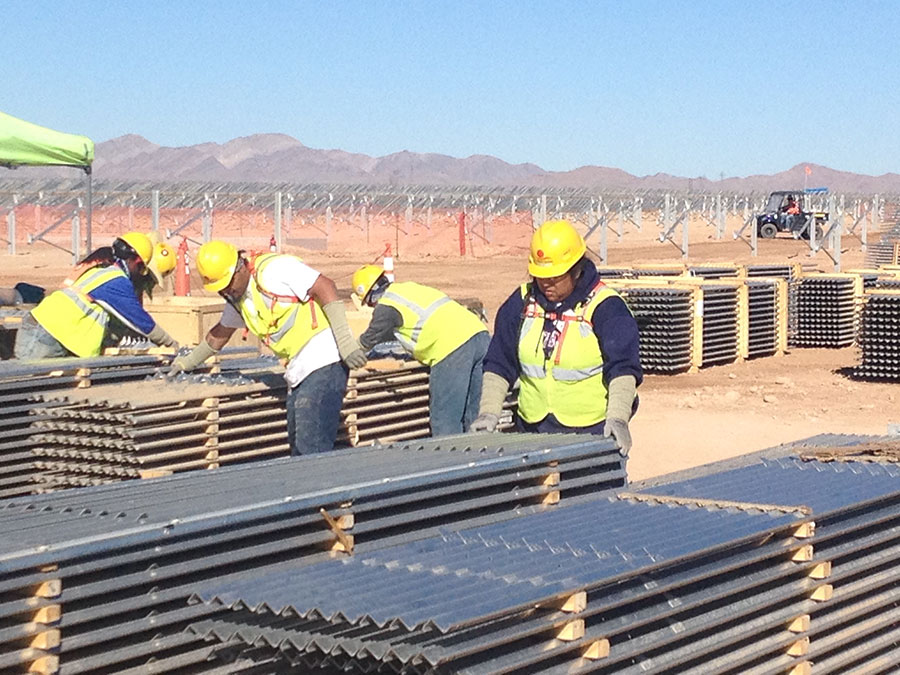
The Moapa Southern Paiute Solar Project, left, a 250 megawatt solar plant northeast of Las Vegas, was competed in 2017. Right, workers unload solar panels. U.S. Department of Energy via Flickr
For the tribal leaders both of the TERAS project of the Klamath Tribes and of the Renewable Solar Program on Navajo land, building reliability and self-managed renewable energy possibilities are key motivators. Yet in other cases, developing independent solar grids to supply the community is not always the most desirable or financially viable goal.
The first solar project on Tribal land, which is still the biggest, always had a commercial focus. The Moapa Band of Paiutes, whose land is 30 miles northeast of Las Vegas, led the way as construction of the Moapa Southern Paiute Solar Project, a 250-MW solar plant, was completed in 2017. It is on Moapa Paiute land, but owned by the publicly traded company First Solar.
Rather than powering homes for the about 420 residents on the reservation, its solar energy is sold to the Los Angeles Department of Water and Power (LADWP) toward the city’s self-described successful goal of producing a third of its energy from renewable sources by 2020.
The financial structure of the project is based on an agreement between First Solar and the LADWP, which has agreed to a 25-year, $1.6 billion deal. First Solar then makes lease payments and other contributions to the Moapa Paiutes, so the project generates revenue for the Tribe and has cultivated an energy workforce of 400 construction jobs.
Tribes have limited capacity and capital, according to Kimberly Yazzie, a postdoctoral scholar in Earth System Science at Stanford University who has been working with tribal communities for over a decade. “It’s a business venture for tribes to go into utility scale projects, and some tribes may not have the capacity,” she said.
Which is why more communities may increasingly seek out partnerships to manage the economic and technical complexities. Yazzie is optimistic that “there’s an opportunity now, even more so for nonprofits, foundations, philanthropy, and universities, to step in and fill that gap in technical assistance.”
Rooftop solar? “It’s not the same process in Indian Country”
One such nonprofit is Indigenized Energy, founded by Cody Two Bears of the Standing Rock Sioux Tribe, in 2017 in response to the #NoDAPL movement against the construction of the Dakota Access Pipeline. Indigenized Energy focuses on building technical capacity in the Plains and Midwest regions so that Tribes can develop and lead renewable power projects. The organization has supported communities by installing solar grids themselves or helping tribes qualify for loans for local contractors to complete installment.
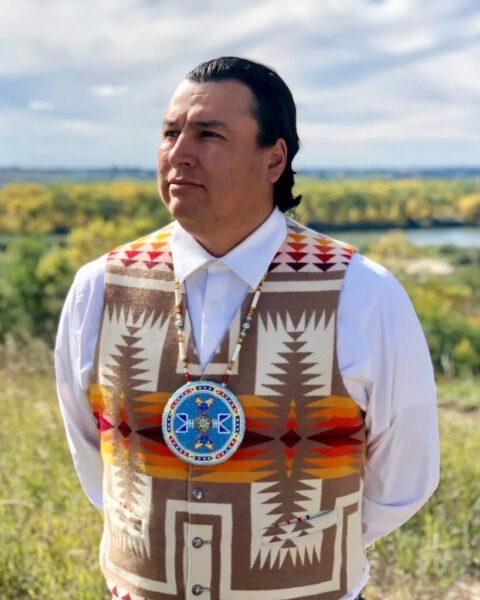
Serena Romero, Director of Communications and Marketing for Indigenized Energy, says technical capacity is a huge barrier to tribes who seek to build solar infrastructure. Many tribal communities are geographically distant from power lines, and it is an unfavorable business move for utilities to deploy technicians.
While a homeowner outside of a reservation “can call a solar company and say, ‘okay, I’d like to get solar panels installed on my home’…that’s not the same process in Indian Country,” Romero said. By training community members to work in the solar space, Indigenized Energy helps create local jobs and empowers tribes to maintain solar energy systems on their own.
Community members like Tim Willink play a crucial role in the construction of solar infrastructure on the Navajo Nation. Willink is a consultant with the Ojo Encino Chapter House to install residential solar panels, mainly on single-family homes, and connect them to the grid. A large part of his work with chapter houses – the more localized units of government on the Nation – involves workforce development and training to create local jobs for engineers and university students.
On the importance of tribal members having hands-on experience with local solar systems, Willink reflected, “If we own the assets and manage them and control them, then we create the local capacity and skillset to develop more and more projects, but we also are able to reap the economic benefits,” Willink added.
From utilities’ misgivings to uncertain federal support, obstacles remain
When developing community solar projects, there is also the economic consideration of partnerships with utilities. While local utilities may cooperate with tribal leadership seeking to reduce the community’s reliance on the grid—such as the Salt River Project has in the case of the Renewable Solar Program—these companies can either be “cooperative” or “adversarial,” says Andrew Curley.
Utilities may be supportive if they receive government incentives to develop clean power, but they may resist tribal independence, avoiding the creation of a competitor. For the TERAS project, Matthew Marshall says, PG&E has been supportive, and he sees their collaboration as “a chance to correct [the] past injustice” of lack of investment from tribal wellbeing in the United States.
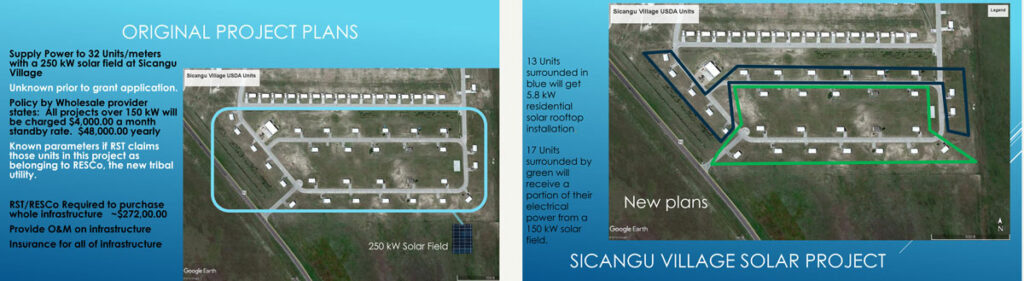
State regulations can pose further restrictions on the scale of tribal electricity projects. For instance, the Sicangu Village Solar Project on the Rosebud Indian Reservation in South Dakota was forced to scale down from 150 kilowatts to 149 kilowatts – a fraction of the size of the Navajo or Moapa solar plants – because of a state law that would charge $4,000 a month for projects 150 KW and above, says Ken Haukaas, the director of forestry for the Rosebud Sioux Tribe.
Though it is too early to tell what a clean energy future looks like for tribes under the Trump administration, the state of renewable projects is shaky. Romero reflected that much of Indigenized Energy’s work is currently done through federal grants and the future of these grants is uncertain. They also rely on major donors.
While tribes may not lose all their incentives for renewables in the new administration — “rural grid reliability is still a priority for the DOE,” said Matthew Marshall — Curley noted the general sense that this administration is against renewable energy technologies, a sharp shift from the clean energy incentives under the Biden-Harris administration.
As tribes across the Western United States build solar systems – from the Northern California TERAS project to the Moapa Southern Paiute Solar Project in Nevada – the question of just how to handle this development remains.
And in regions that have been historically underdeveloped, Marshall believes solar energy projects are a pathway toward a thriving environment and livelihoods: “By addressing climate change, we’re making our community more resilient and more able to respond to disasters.”

Edited by Felicity Barringer and Geoff McGhee.