
California is at the forefront of the electric vehicle transition, with more registered than any other state: 425,300 at the end of 2020, compared to 58,160 in Florida, the next largest market, according to the Alternative Fuels Data Center. Governor Newsom announced in September that California would ban the sale of new gas-powered vehicles by 2035.
But a lack of charging station infrastructure is still hampering the growth of EV adoption, with Black- and Hispanic- majority populations 30 percent less likely to have charger access than other groups, according to Chih-Wei Hsu of Humboldt State University.
While single-family home owners in affluent census tracts don’t need access to public chargers because they are more likely to have access to a personal charger in their garage or driveway. Renters and people who own apartments have a harder time charging because they often park on the street or in public lots shared by many vehicles.
Here is a map of all of the EV charging stations in California as of July 2021; while listed as “public,” a number of these stations, such as those in condo parking garages, are not open to non-resident access.
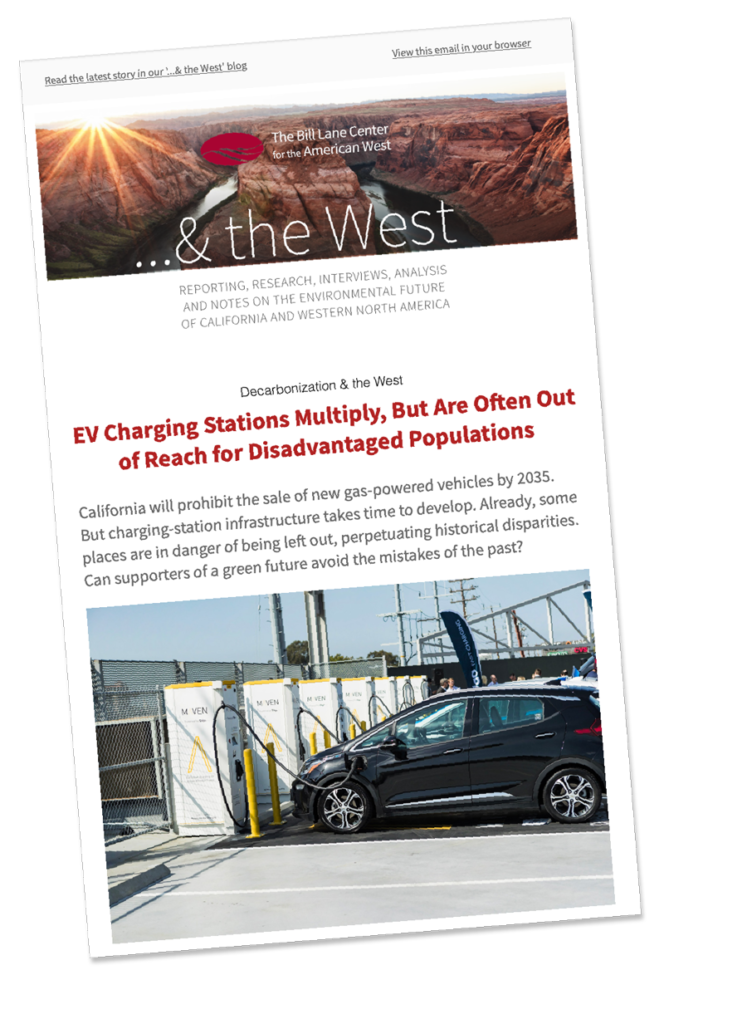
Related article: EV Charging Stations Multiply, But Are Often Out of Reach for Disadvantaged Populations