
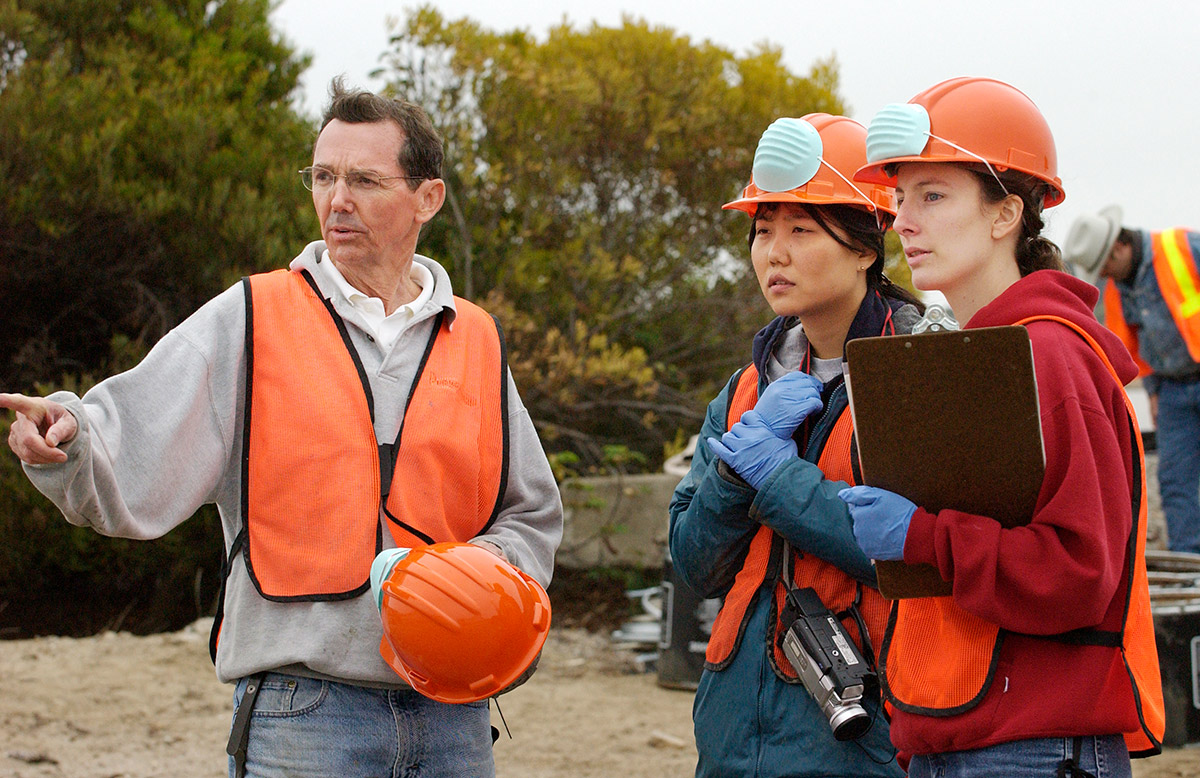
Above: Prof. Richard Luthy and Stanford graduate students discuss an experiment to neutralize pollution at the former site of the Hunters Point Naval Shipyard in San Francisco in 2004. Linda A. Cicero / Stanford News Service
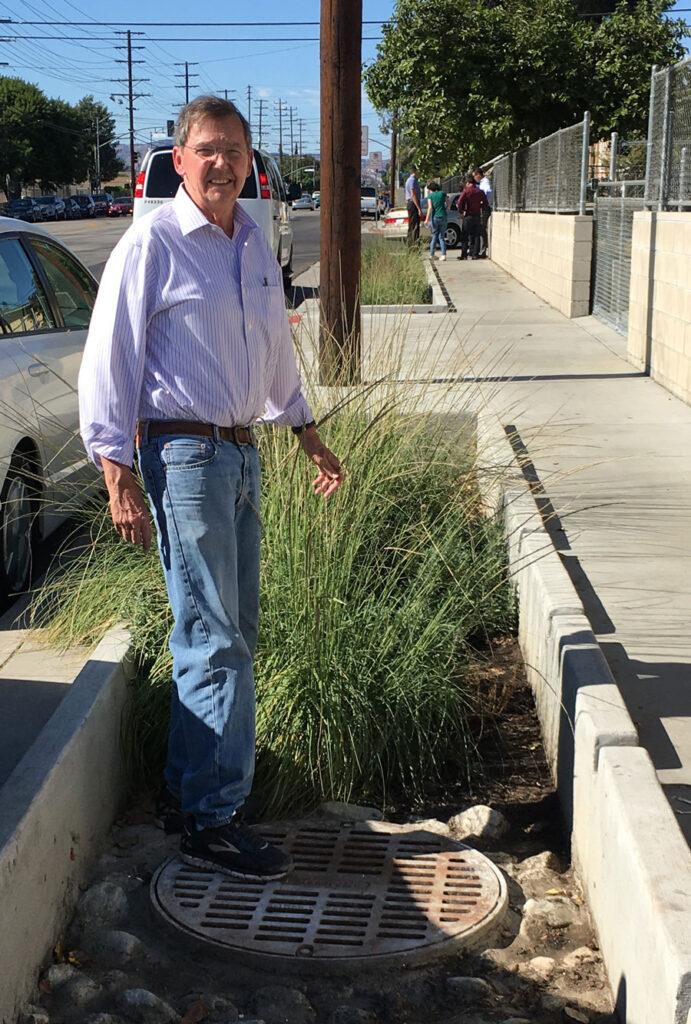
Richard G. Luthy is the Silas H. Palmer Professor of Civil and Environmental Engineering at Stanford University, and the former director of the National Science Foundation’s Engineering Research Center for Re-inventing the Nation’s Urban Water Infrastructure (ReNUWIt), a four-university consortium. His work focuses on ways to ensure that water overflows in both urban and rural California can be captured and stored underground — a requirement now as the ability to construct new dams for overground storage has almost vanished.
Felicity Barringer, the editor and lead writer for “& the West,” conducted this interview.
Felicity Barringer: Water supplies in California have always been whipsawed as periods of floods alternate with periods of drought. For all the billions of dollars of investment in California’s water infrastructure and its dams and canals, water reliability still eludes the state. There have been three debilitating droughts in the last 15 years. Water agencies are now devoting significant resources to enhancing supplies, both reusing water and finding new places to store it. But there’s a difference between urban and agricultural areas when it comes to storage capability. Can you describe the difference?
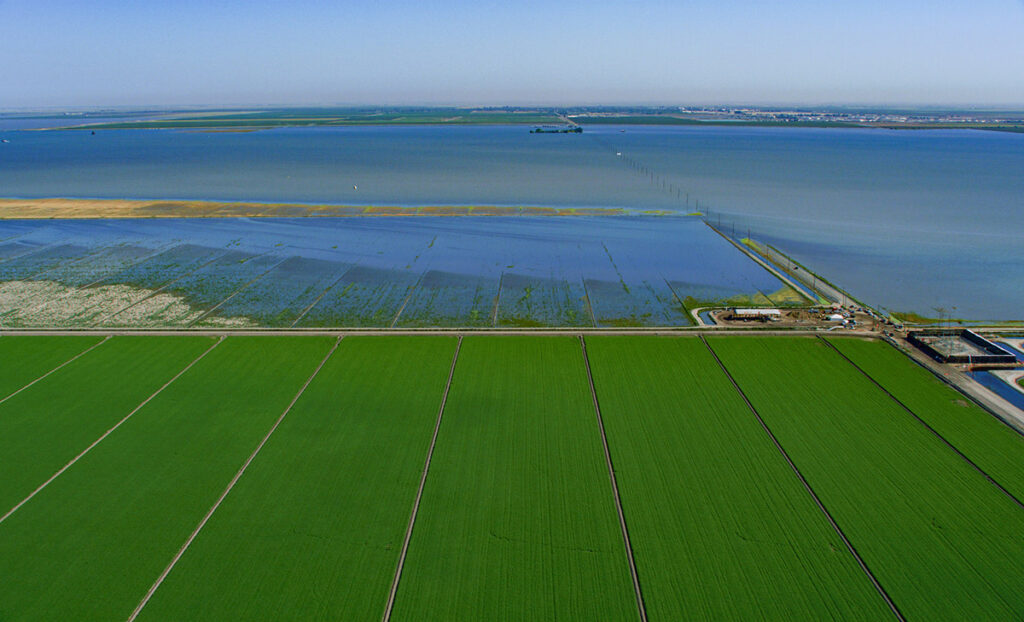
Richard Luthy: When we think of storage, what comes to mind are reservoirs. In California essentially all the good reservoir sites have already been taken. One of the last reasonable locations is the proposed Sites Reservoir in northern California’s Colusa County for off-stream storage of water from the Sacramento River. That will be able to hold 1.5 million acre-feet of water when it is completed. [An acre-foot is the equivalent of 325,851 gallons, or enough water to last two to three average homes for a year.]
Meanwhile, further south in the San Joaquin Valley, over-pumping of groundwater has resulted in substantial subsurface storage capacity in agricultural areas. The groundwater is gone, but the aquifers that held it remain, and could provide considerable storage space.
Groundwater recharge and storage is different between urban and rural areas. Mainly it’s a matter of geology and available land. Los Angeles and Orange Counties have the right geology in some places where recharge is possible. Los Angeles, for example, has a number of recharge basins at the base of the San Gabriel Mountains. In the Bay Area there are recharge basins near Los Gatos and in the Quarry Lakes recreational area between between Fremont and Union City. But aside from that there aren’t many good places in our urban environment for recharge because of the clayey soil on the flatlands around the Bay.
“In the San Joaquin Valley, groundwater over-pumping since 1960 has created about 80-100 million acre-feet of potential storage capacity.”
The situation is different in agricultural areas where there’s land and where groundwater has been over-pumped, which creates space for recharge. In the San Joaquin Valley, groundwater over-pumping since 1960 has created about 80-100 million acre-feet of potential storage capacity. Whether or not all that can be realized, it’s still many times the volume of the major reservoirs in the Sacramento and San Joaquin regions.
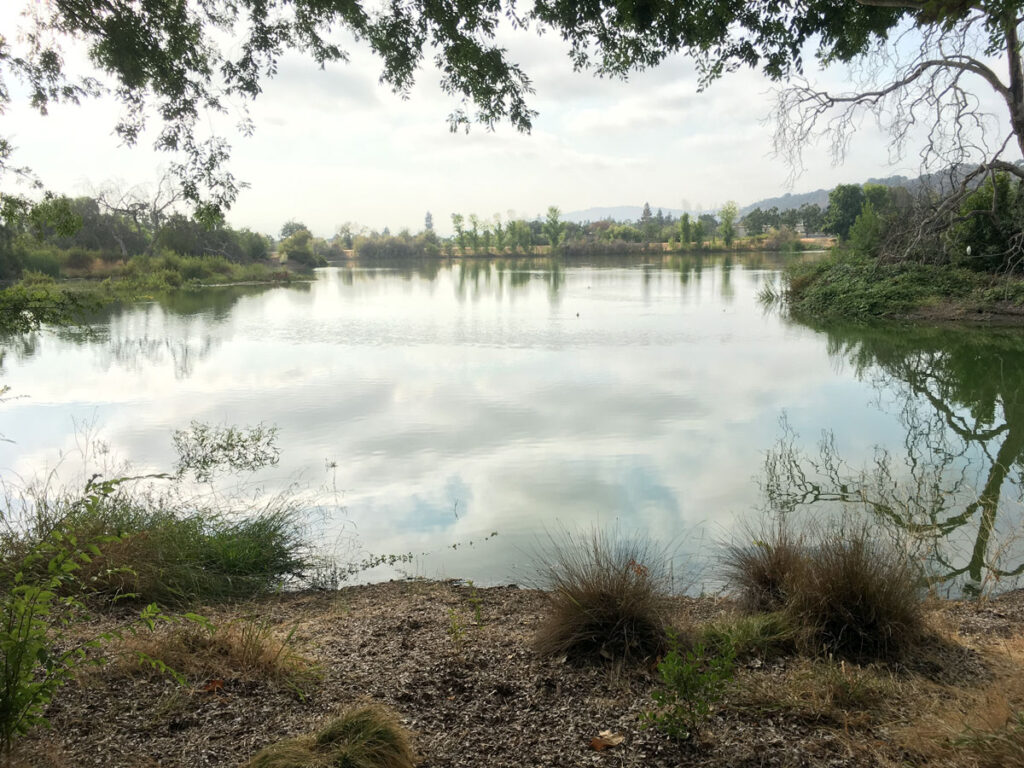
There are several water banking facilities in Kern County that can store water for both rural irrigation districts and cities. Because of the 440-mile California Aqueduct, it’s possible for Valley Water, the water wholesaler for Santa Clara County , for example, to store water near Bakersfield. Like many water agencies, it is entitled to take a set amount of water from California’s State Water Project. But by not using its full entitlement to State Water Project (SWP) water, that entitlement can be stored in an underground holding area near Bakersfield, called a water bank.
This exchange allows Valley Water to forgo taking water directly from the aqueduct and let that water be taken out near Bakersfield and stored underground. When Valley Water wants to withdraw water from the water bank, it takes more than its entitlement of water from the SWP aqueduct up north and then makes that up by pumping water back to the SWP from storage in the south. Valley Water pays the Semitropic Water Storage District to handle the recharge and pump-back. The water bank capacity for VW is 350,000 acre feet. By comparison, the Anderson Reservoir (VW’s largest) holds about one-fourth of that amount — 89,000 acre-feet.
FB: Your earlier work was focused on stormwater recapture, particularly in the Los Angeles area. Why have southern California cities made many more efforts to set up systems to capture stormwater, compared to northern California cities? What urban areas have been most successful at both capturing and cleaning stormwater? Where have efforts to recapture stormwater been wanting?
“The City and County of Los Angeles imposed a parcel tax to fund stormwater initiatives that was approved by the voters in 2018. This is funding stormwater capture and recharge.”
RL: One important issue when it comes to capturing stormwater is ground permeability and available space in the subsurface unsaturated zone. In the Bay Area, the flat lands adjacent to the bay have lots of clay and water doesn’t naturally infiltrate well. (Just try digging a hole to plant a tree, it’s hard!) Palo Alto, Menlo Park, and other cities on “the flats” have clayey soil. The best place for recharge is in the hills or the base of the hills (for example Los Gatos Spreading basins near the intersection of 85 and 280).
The San Fernando Valley in Los Angeles comprises the outwash from the Los Angeles River and other streams. That ground is quite permeable. The San Fernando Valley has the right geology for percolation. The City and County of Los Angeles imposed a parcel tax to fund stormwater initiatives that was approved by the voters in 2018. This is funding stormwater capture and recharge, which will play a big role in securing the city’s future water supply, along with water reuse.
In the Bay Area, one option to avoid the obstacles posed by the pervasive clay soils would be to have a centralized collection point, then treat the water and pump it to percolation ponds in areas where percolation is possible. But the pipeline for that is expensive. We’ve looked at that for capture and recharge of Coyote Creek water being pumped to the Los Gatos spreading basins. These basins were constructed in the 1920s and infiltrate water from Los Gatos Creek, downstream from the Lexington Reservoir. They were constructed to help address land subsidence due to over-pumping for irrigating the orchards that were once a dominant part of the local economy. Today those basins contribute to water supply and provide co-benefits of a park and hiking trails.
So the idea would be to capture runoff in Coyote Creek, which flows along the east side of San Jose, and take that water just before it enters the Bay. That’s a lot of water, and building a pipe and pumping to Los Gatos is expensive. But it’s still less than what we pay San Francisco Public Utility Commission for Hetch Hetchy water.
Stanford University, on the peninsula south of San Francisco, collects runoff on both the east and west sides of campus. It doesn’t percolate because of the clay. Instead the university takes advantage of the campus lake water irrigation system and reverse pumps to Felt Lake. Felt Lake is Stanford’s ‘rain barrel.’
Another place in the peninsula area where stormwater is recharged is at Orange Memorial Park in San Mateo County.
FB: Your focus more recently has turned to groundwater storage. Can you describe how the planning, the infrastructure and the regulations differ between stormwater recapture and recharging groundwater? What are the similarities, if any, between the requirements of finding good basins in urban areas to store captured stormwater and finding the best places to develop recharge basins in the agricultural areas of the Central Valley? In which agricultural areas has groundwater been most successfully recharged?
RL: Because of the concern for groundwater protection in California, there are state regulations on injection of water into the subsurface. But they don’t apply to capturing and percolating stormwater. Stormwater isn’t injected; the regulations affecting it are passed by localities and typically address operational issues like holding time in a pond (a few days at most) to avoid allowing mosquitoes to breed. I think things are changing with increasing use of runoff. In Los Angeles the issue is urban contaminants like insecticides, herbicides, automotive chemicals and such. Lately, however, perfluorochemicals are receiving attention.
Los Angeles plans widespread deployment of dry wells and if this were done at a basin scale, some treatment would be needed. Dry wells are deep holes in the ground with gravel that receive street runoff with minimal treatment, like trash removal and sand removal.
FB: The Public Policy Institute of California reported recently that in the 2023 water year, the total volume recharged in California’s Central Valley was 7.6 million acre feet, an increase of 17 percent over 2017. What changed? Can you describe what you have seen local water agencies doing to enhance their ability to develop the infrastructure needed to create recharge basins and direct excess water into them? How much does it cost, and where can that money come from?
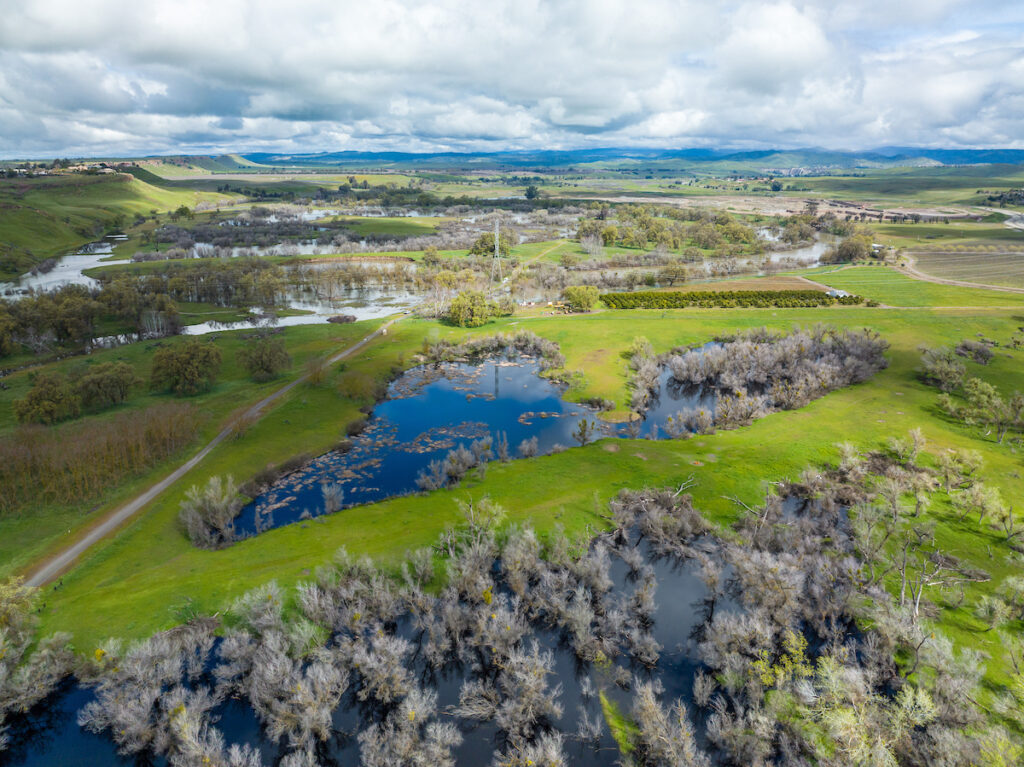
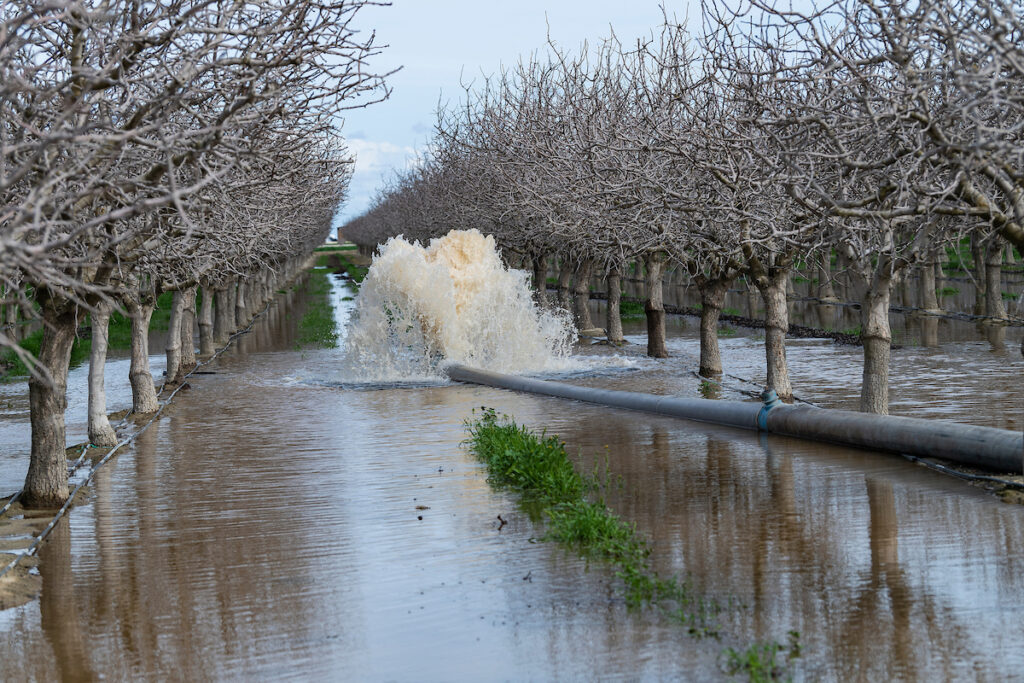
RL: One change made in 2023, and continued in 2024 and 2025, is that the governor relaxed permitting rules for recharge. The rules were established years ago to ensure the downstream water rights holders didn’t lose their water to upstream diversions. But with the overabundance of rain in 2023 and the potential for flooding in the San Joaquin Valley, it was clear that diversions to groundwater basins would not impact the downstream holders of water rights. So the diversions happened roughly from February to June, using mobile pumps and making sure the diverted water had no contact with dairy farms or land recently treated with fertilizer or pesticides.
“Another change is a movement towards irrigation districts building dedicated recharge basins.”
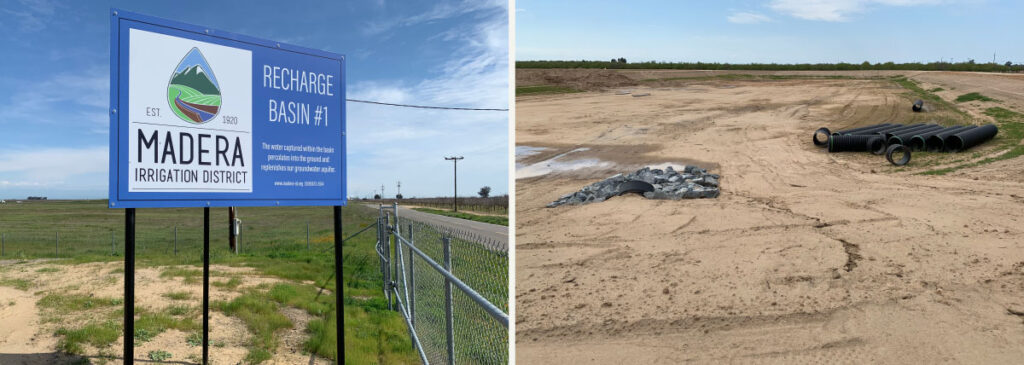
Another change is a movement towards irrigation districts building dedicated recharge basins. Dedicated basins can be engineered by scraping a compacted surface layer and clay and agricultural chemicals and building berms. Also, they can be repeatedly filled, and maybe six feet deep with periodic refilling. These might be 40 to 60 acres each.
Land in the San Joaquin Valley for a recharge basin might cost $20,000 per acre. There would be construction costs on top of that. The irrigation district charges fees for the delivery of water (and farmers comprise the district’s board’s membership.) This is happening in Madera and Fresno Irrigation Districts for example.
Andrew Innerarity/California Department of Water Resources
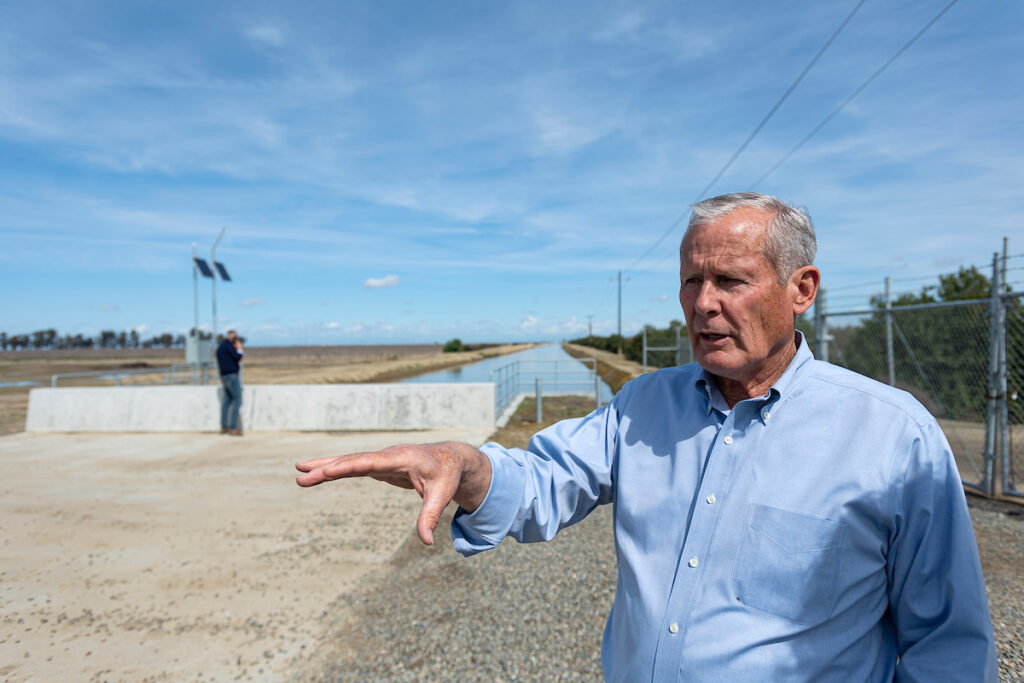
Farmers can do this too. Don Cameron, General Manager of Terranova Ranch, oversaw the construction of five miles of canals and purchase of diesel booster pumps for recharge. But this is expensive and took ten years with permitting and construction. Nonetheless, the ranch recharged over 18,000 acre feet in 2023. Terranova Ranch is a 9000-acre farm and has the resources to undertake an operation of this scale.
FB: What are the legal, practical, and political obstacles facing a water district that wants to enhance its ability to recharge floodwaters? How can they be overcome?
RL: This is something that requires more investigation. However, irrigation districts don’t condemn land. An irrigation district will advertise a purchase price for land and then see who comes forward with an offer. The irrigation district will decide based on various factors like adjacency to canals and what co-benefits may come with the purchase. I think one legal/political issue is to have a regular process for capturing high flows without the governor making a proclamation on a year-by-year basis. This could make temporary pumping permits predictable and less expensive.
FB: Some sites have much better geology for recharge than others. But the land that becomes available on Central Valley farms is priced based on its growing capacity, not its underground geology. How hard is it to locate recharge basins in the best spots?
This is a good question. What I’ve seen is that the irrigation districts have been in business for 100 years, and they know what areas are good for percolation. What they don’t know is whether naturally occurring subsurface contaminants are a threat and how best to deal with that.
As a practical matter, which new sites are established for recharge depends on who wants to sell at an offered price. Then decisions are made as to whether this is a good deal or not. Therefore, the priority for irrigation districts shifts from site selection for optimal infiltration to implementing best management practices for water quality from the outset of recharge planning.
FB: You are working to accelerate the implementation of dedicated recharge basins. For every new recharge basin, there will be more acre-feet of water stored for future use. What metrics do you follow to determine the acceleration of dedicated recharge basins and the amount of water they can store?
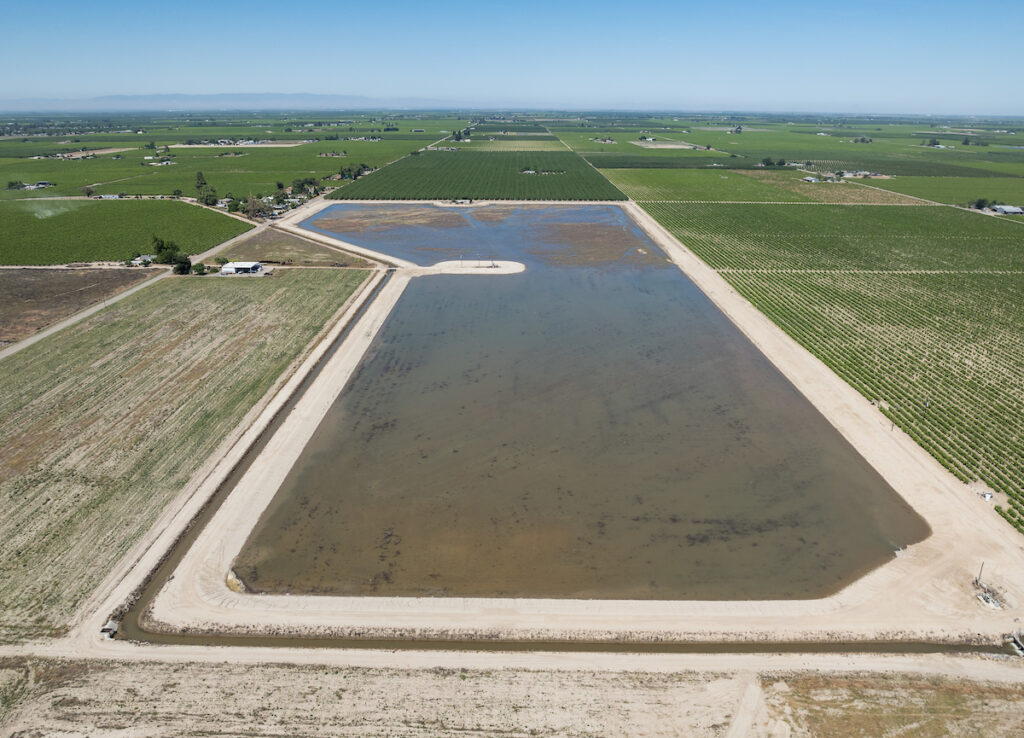
RL: Recharge basins percolate water, and a good recharge basin will look empty because the water has drained (i.e. it only looks like a lake for a short while.)
“For water quality, we need to ensure that the surface layer of the basin and the recharge water will not mobilize naturally occurring arsenic, chromium, and uranium.”
Our approach considers a) water quality, b) recharge delivery, and c) co-benefits. These are three aspects needed to accelerate implementation of dedicated recharge basins. For water quality we need to ensure that the surface layer of the basin and the recharge water will not mobilize naturally occurring arsenic, chromium, and uranium. Our preliminary work shows that uncaptured, high flows offer a significant opportunity to help meet the needs of both irrigation districts and downstream users.
What’s missing is better understanding of the magnitude of such flows and what infrastructure investments would have the biggest payoff for capturing and recharging these flows while also reducing flooding risks. Irrigation districts recognize the importance of serving small communities in their districts but have not incorporated that recognition into their current operations. Simply stated, there is a need for insights on how to achieve co-benefits for all communities.
FB: As you reckon with the hydrological, economic and political realities of finding new ways to store water in California, do you think that the state’s water resiliency will get better or stay about the same over the next decade? Is there a different answer for urban water districts and rural irrigation districts?
RL: I am optimistic. Of course we need the political will, but recurring droughts are a reminder that we need to plan for a more water-resilient future.
There isn’t a single activity that will solve our water problems, but conservation, recycling, desalination, stormwater capture, recharge, and water banking will go a long way. Desalination can mean brackish surface water or groundwater, not just seawater. Locally, Alameda County Water District treats brackish groundwater, and Anitoch treats brackish surface water.
“There isn’t a single activity that will solve our water problems, but conservation, recycling, desalination, stormwater capture, recharge, and water banking will go a long way. ”
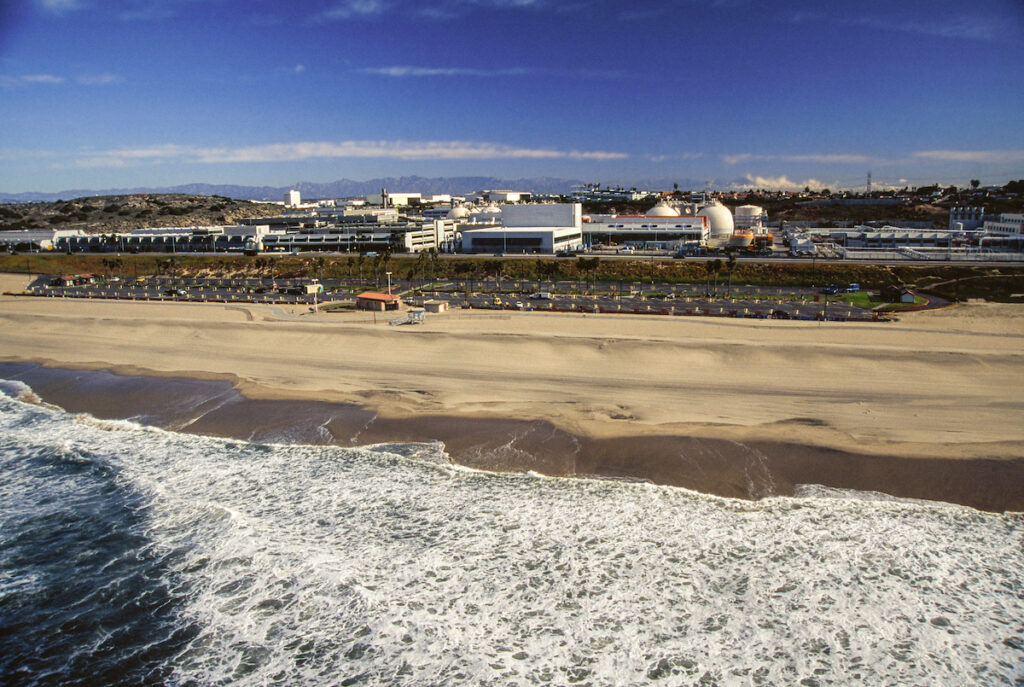
The coastal urban areas in California can reuse treated wastewater that otherwise would go to the ocean. We have some excellent examples in Orange County and Monterey. Increasingly, we see a move towards potable water reuse.
An agency like the San Francisco Public Utilities Commission can partner with irrigation districts like those in Modesto and Turlock to recharge water to help meet water demands and environmental flow requirements during droughts. Irrigation districts in the San Joaquin Valley can achieve the goals of the Sustainable Groundwater Management Act, the 2014 law designed to ensure future groundwater supplies, by capturing surge or flood flows with dedicated recharge basins.


‘We need to plan for a more water-resilient future:’ Q&A with Richard G. Luthy, urban water expert
Professor Luthy’s work focuses on ways to ensure that water overflows in both urban and rural California can be captured and stored underground. He spoke with & the West about the measures the state needs to consider to protect its water supplies into an uncertain future.

Efforts to preserve California’s groundwater enter a new phase: a season of judgement
Architects of the 2014 Sustainable Groundwater Management Act tried to forestall conflict between state regulators and local groundwater users. But judging plans “inadequate” creates hard-to-reconcile differences.
In times of scarcity, California’s best new source of water? Reuse.
While expensive solutions like new reservoirs and seawater desalination grab attention, California communities are quietly building up their capacity to clean stormwater and wastewater for reuse for irrigation, industry and, yes, drinking water too.
A simmering revolt against groundwater cutbacks in California
New agencies find making sustainability plans is hard, but easier than persuading growers to accept them.

California Water on the Market: Q&A with Barton “Buzz” Thompson
Three months after the first market trades of California water futures, a conversation about economic forces and an essential material for life.

Small Farmers Wait for California’s Groundwater Hammer to Fall
Farmers, large and small, are beginning to grapple with what the Sustainable Groundwater Management Act means for them. Many expect to see cutbacks on pumping once the program is fully implemented in 2040.

Putting a Tempest into a Teapot: Can California Better Use Winter Storms to Refill its Aquifers?
With new rules coming into effect, farmers and municipalities using groundwater must either find more water to support the aquifers or take cropland out of use. To ease the pain, engineers are looking to harness an unconventional and unwieldy source of water: the torrential storms that sometimes blast across the Pacific Ocean and soak California.

As California’s Groundwater Free-for-All Ends, Gauging What’s Left
New rules and new technology are giving farmers and managers a better look at groundwater supplies.

To Save Crops, Farmers Took Groundwater. Then the Land Sank
Like the topsoil, structures built 40 years ago to contain floodwaters are cracking, too.

To Manage Groundwater, California Must First Get Basin Boundaries Right
A vineyard in Paso Robles. Mattyshack via Flickr By Felicity Barringer A hidden treasure, groundwater has long sustained agriculture through California’s cycles of drought. Decades





















3 replies on “‘We need to plan for a more water-resilient future:’ Q&A with Richard G. Luthy, urban water expert”
Just what I needed today.
I like the efforts you have put in this, regards for all the great content.
Thanks for the kind words.