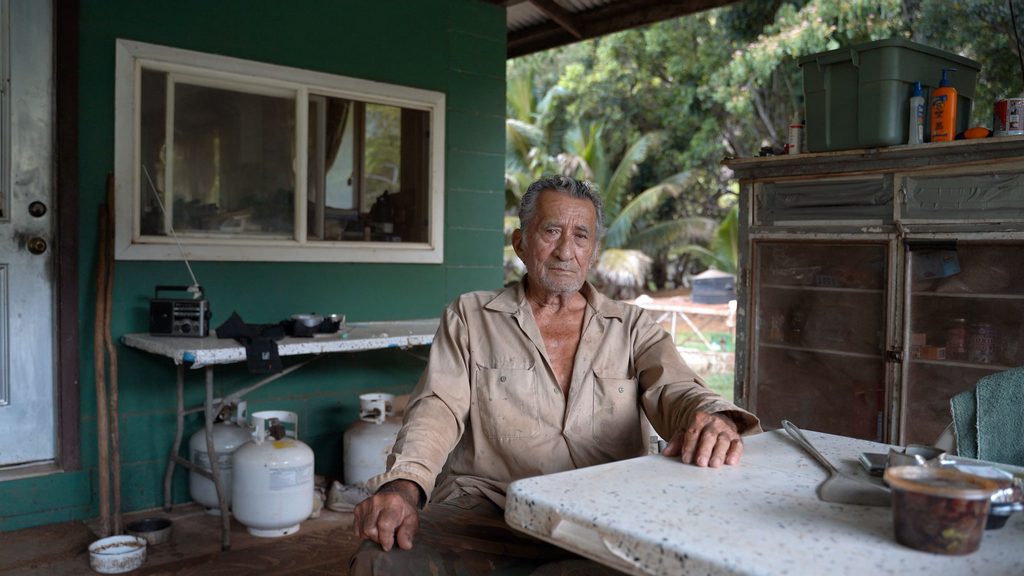
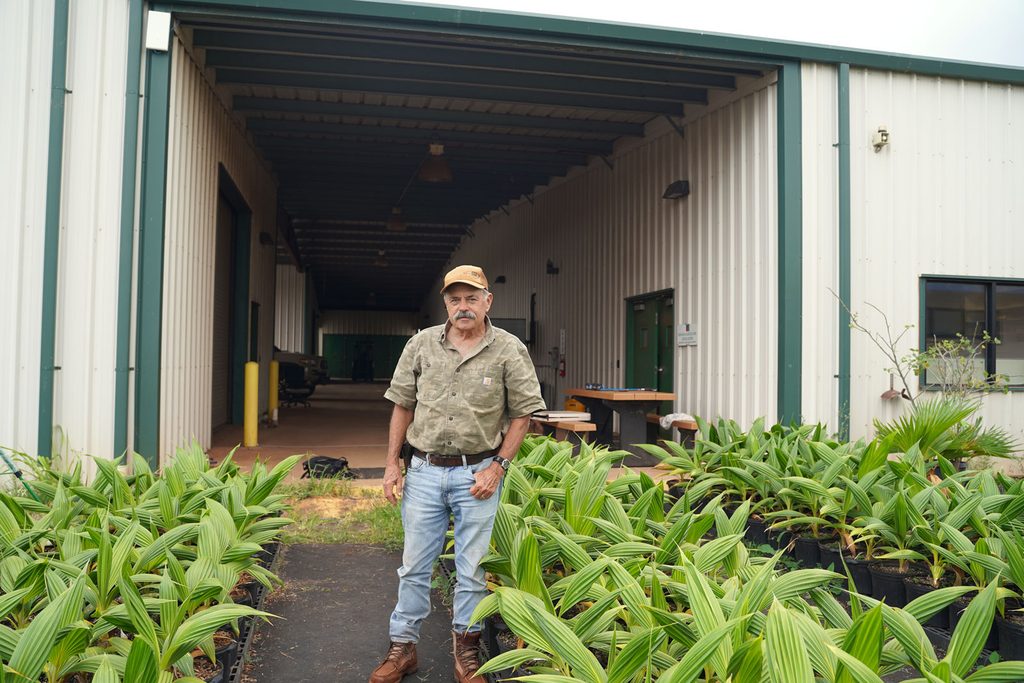
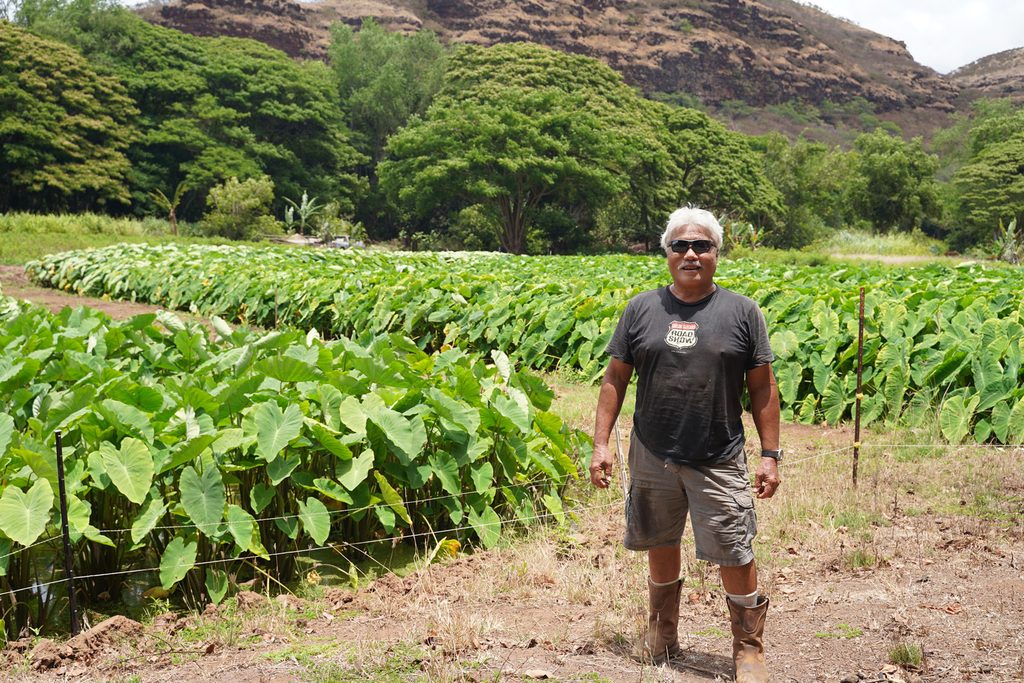
Tapping the rainy uplands. Franklin Douglas Dusenberry Sr.’s taro farm in West Kaua‘i, fed by the Kekaha ditch. Photo by Keola Manoi
WEST KAUA‘I, HAWAI‘I – Today, on ground that was once a sugar plantation camp storing dynamite and heavy equipment, Franklin Douglas Dusenberry Sr. cultivates taro with the help of his family. Taro is a plant with large heart-shaped leaves and an edible, starchy stem. For over a millennium, it has been Hawai‘i’s mainstay food, found in dishes such as poi, prepared from the pounded root of the plant.
Dusenberry’s crop on the arid, western end of the island dates back generations, but his irrigation system is more recent: he draws water from one of the ditch systems left over from a now-closed sugar plantation.
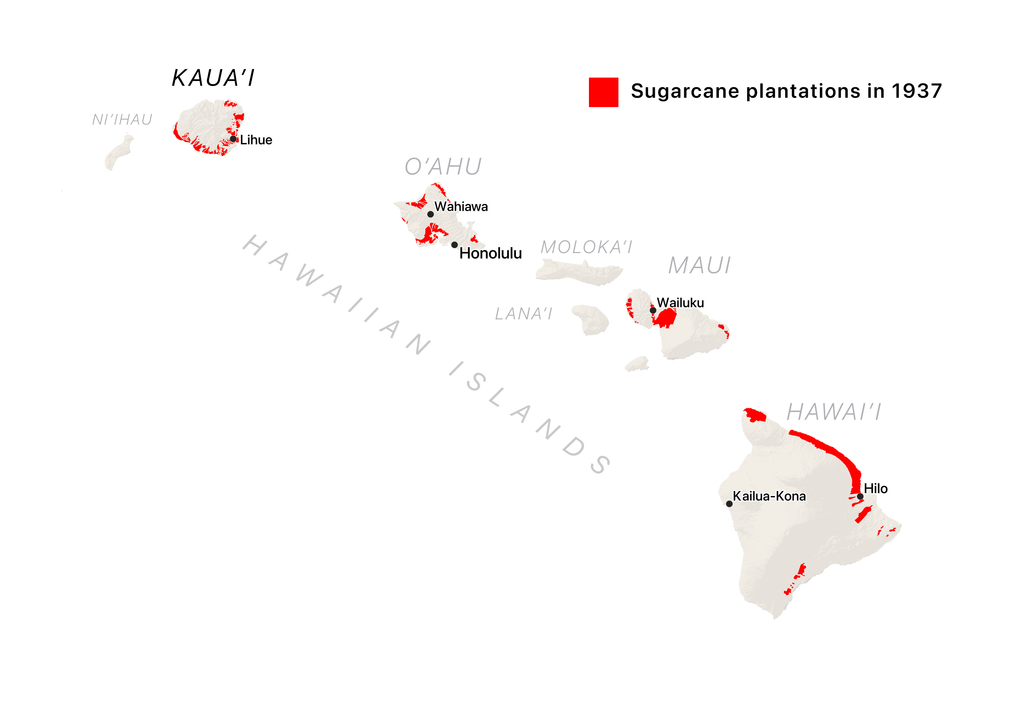
The ditch system, now the source of local controversy, is the product of a 19th century sugar boom. In the 1860s, the price of raw sugar rose from 4 cents per pound in 1861 to 25 cents 1864, during the American Civil War – about $5.33 in today’s dollars, whereas modern raw sugar trades at around 60 cents per pound. American business interests rushed to take part in the Hawaiian sugar rush: while in 1857 there were five sugar plantations on the archipelago, by 1884 there were ninety.
Equally staggering was the amount of water this thirsty crop needed. Producing just one pound of sugar took 4,000 pounds (500 gallons) of water. To irrigate 100 acres of sugarcane, growers needed a million gallons of water every day.
Sugar cultivation spanned the archipelago, from Hawai‘i Island to Kaua‘i, until the state’s last plantation on Maui closed in 2016.
A sugarcane boom once spanned the Hawaiian archipelago
The last sugarcane plantation on Maui closed in 2016.
& the West
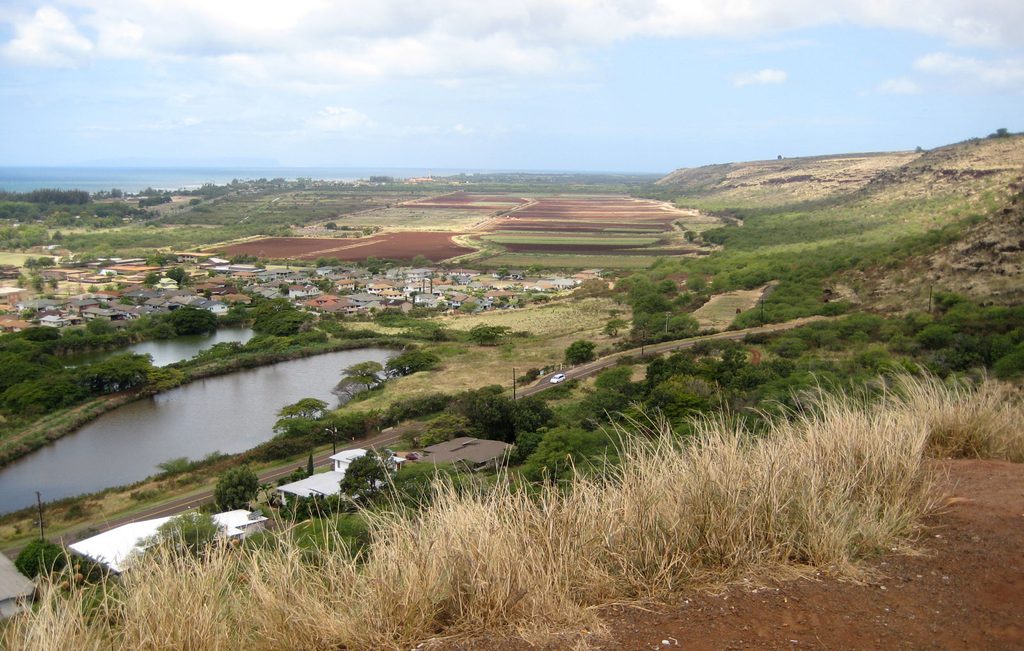
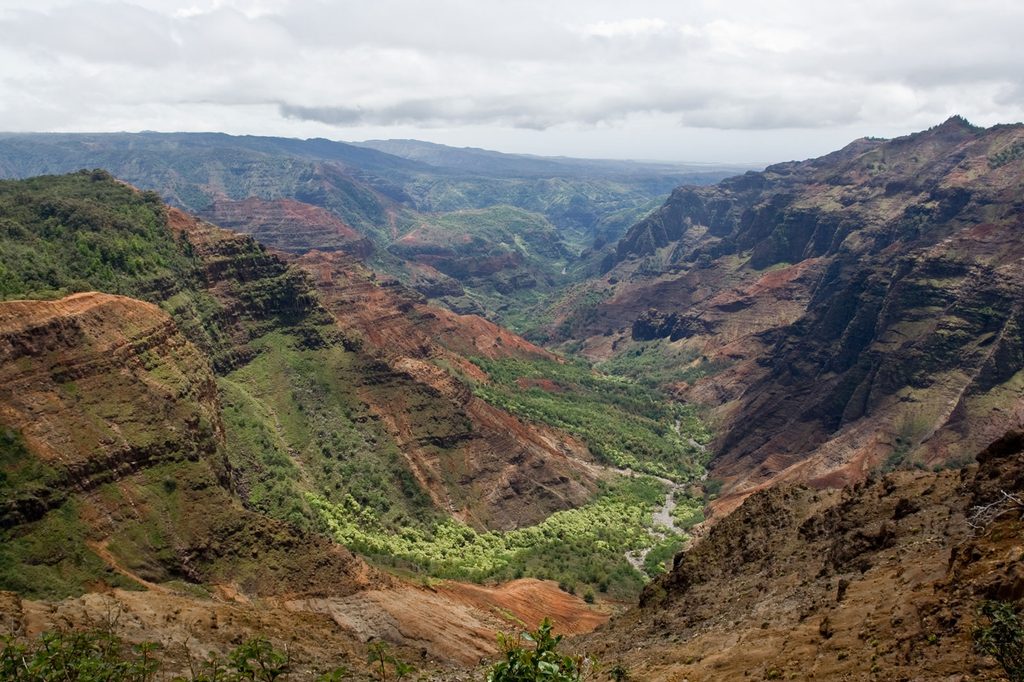
Kaua‘i’s steep topography and intense rainfall made large-scale water diversion possible. At the island’s center is one of the wettest places on earth: Mount Wai‘ale‘ale, which along with the high-elevation Alaka‘i Swamp captures moisture-laden trade winds, producing nearly 374 inches of annual rain at the summit, compared with just 20 inches on the dry Kekaha-Mānā Plain about 15 miles away.
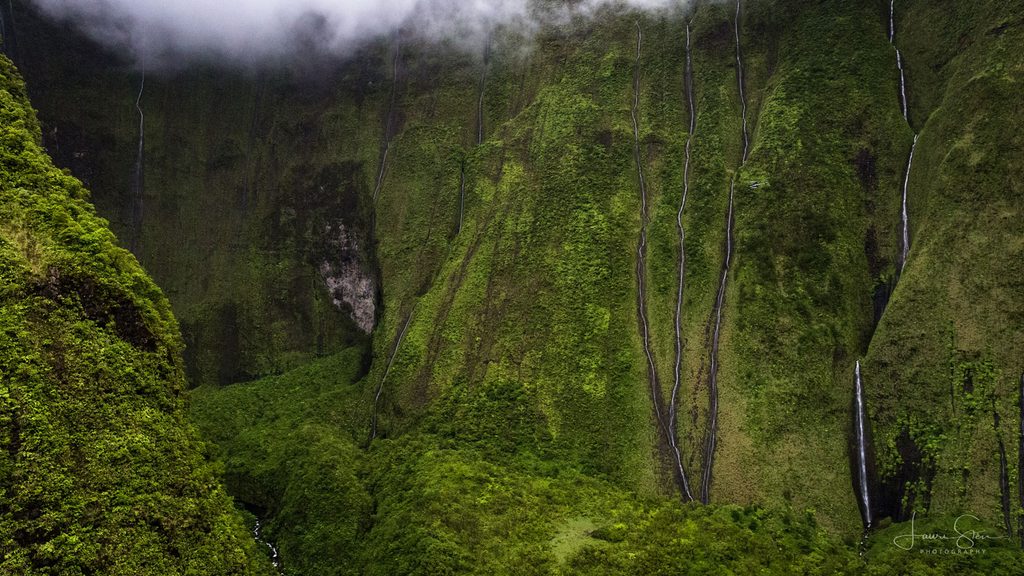
Plantation engineers tapped streams thousands of feet above sea level and used gravity-fed ditches and tunnels to carry water through canyons to the dry leeward plains. To create more farmland, they also drained the Mānā Plain’s wetlands and marshes on the western shore of the island, turning places where Hawaiians once paddled canoes into sugarcane fields.
In Hawaiian, wai means water, its importance evident in the way it trickles into the meanings of the words wealth: waiwai, and law: kānāwai. Traditionally, water was managed communally across watersheds as both a responsibility and privilege.
“You take what you need today, and there’s always some for tomorrow,” says the west side fisherman and hunter Kawai Warren. “There’s always connectivity, and the water goes back into the river.” In other words, traditional stream diversions were designed to maintain the connection between mountain and sea.
Traditional stream diversions were designed to maintain the connection between mountain and sea.
In West Kaua‘i, two ditch systems carried diverted water to dry agricultural lands. One is the 21-mile Kōke‘e Ditch, which brings water from the high, wet mountain forests in the mountains of Kōke‘e and the high plains of Alaka‘i. The second is the 28-mile Kekaha Ditch, which begins from the middle of Waimea Canyon, and travels by gravity to Polihale.
Mountain streams such as Koaie and Waiahulu were diverted into the Kekaha Ditch, which carried the water through open earth-lined channels toward reservoirs and agricultural lands. Flumes and black-pipe siphons carried water across gaps in the system.
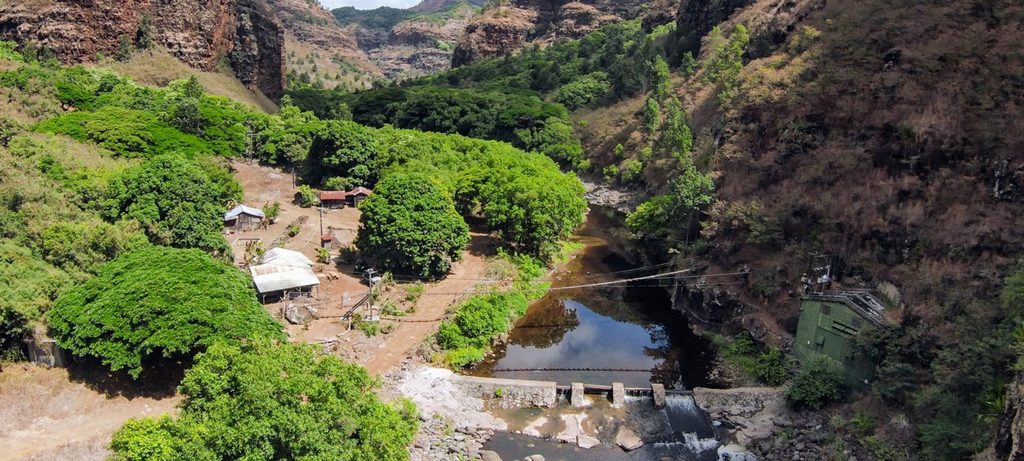
Before the diversions, Hawaiians had refined irrigation systems of their own to cultivate crops, mostly taro. To meet sugarcane’s enormous need for water, plantation workers built over the old system as part of an extensive network of new ditches, tunnels, and reservoirs: in short, they reengineered the land.
Channeling water from a rain-drenched peak
In West Kaua‘i, two ditch systems carried diverted water to dry agricultural lands. One is the 21-mile Kōke‘e Ditch, which brings water from the high, wet mountain forests in the mountains of Kōke‘e and the high plains of Alaka‘i. The second is the 28-mile Kekaha Ditch, which begins from the middle of Waimea Canyon.
& the West
Decades after the 2001 closure of the Kekaha Sugar Company marked the sugar industry’s final collapse, the plantation-era ditch infrastructure remains largely intact. Much of the former plantation lands are now the property of a state agency, the Agribusiness Development Corporation (ADC), which owns 12,592 acres. Day-to-day operations on these lands are managed by the Kekaha Agriculture Association (KAA), a cooperative formed by the corporation’s tenant farmers.
The question of water now is how best to manage it – and pay for that management – when an aging colonial water system no longer fits the purpose. It has proven to be a question without easy answers anywhere in the islands.
How do you reform antiquated water arrangements that benefited only a few, particularly the sugar plantations? Different islands have had different answers. On O‘ahu, a battle over the historic Waiāhole Ditch required years of grueling administrative hearings and state Supreme Court rulings that established that diverted water must be returned to its home streams. Across Maui, communities from East Maui to the west side are in an ongoing legal battle to undo historic diversions and restore flows to ancestral farming lands.
For West Kaua‘i, there once seemed to be an answer: the 2017 Mediation Agreement for the Waimea Watershed area. It declared: “All streams will be allowed to run from the mountain to the sea and no diversion will ever be a total diversion again.” In accordance with the agreement, the community, local industry and the state share the responsibility of supplying water to Hawaiian home lands, commercial agriculture, and taro farmers who rely on the Menehune Ditch — an ‘auwai (traditional irrigation channel) in the lower Waimea Valley that predated the plantations by centuries.
But the plantation era had essential things the post-plantation system lacks: money and manpower to maintain the infrastructure. With his family line tied to West Kaua‘i, Dusenberry Sr. reflects: “When the plantation was running, this place was really upkept,” he said. “Now everything is about cost control, and everything is neglected.”
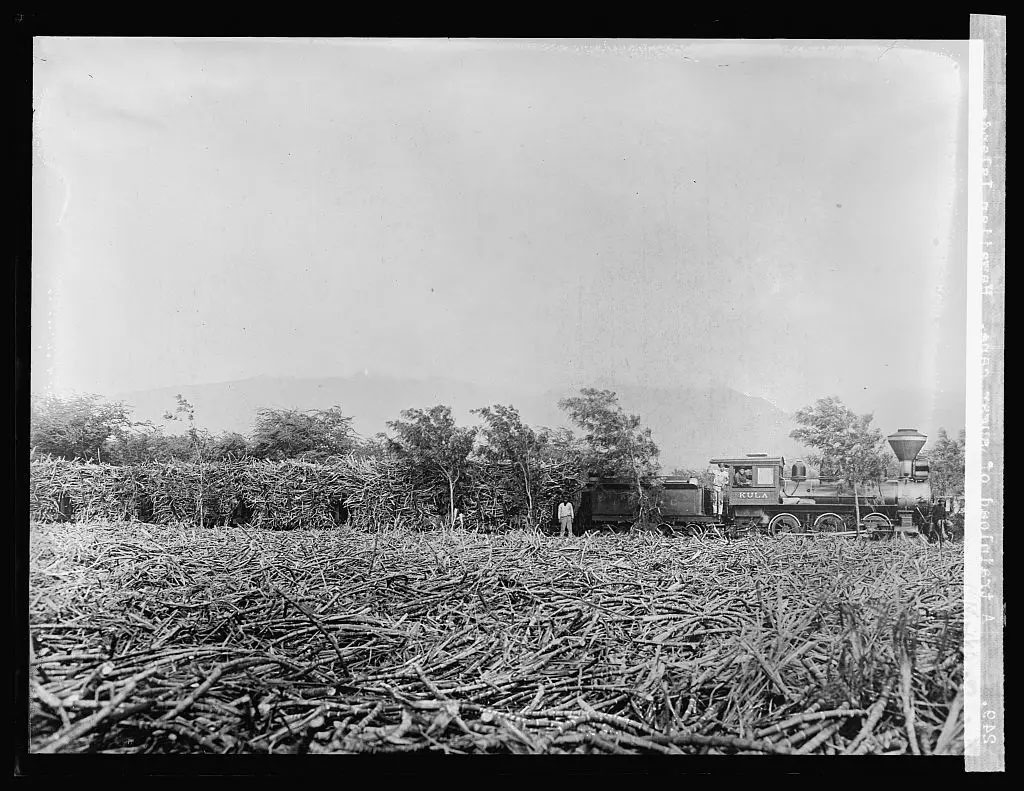
Back in the plantation days, the Kekaha Sugar Company – which shared its name with one of the ditch systems – was a rich operation with hundreds of workers that relied on these ditches to provide around 50 million gallons per day (enough to fill about 75 Olympic-sized swimming pools) from the Waimea River and its mountain tributaries.
The job of maintaining this expansive and aging infrastructure falls to a drastically reduced crew. Keola Manoi, Franklin Dusenberry Sr.’s grandson, works for the KAA co-op as one of only three machine operators alongside three ditch men. Together, they are responsible for monitoring and maintaining miles of ditches, flumes, and tunnels that deliver water to three bigger agricultural enterprises and many smaller farmers and residents.
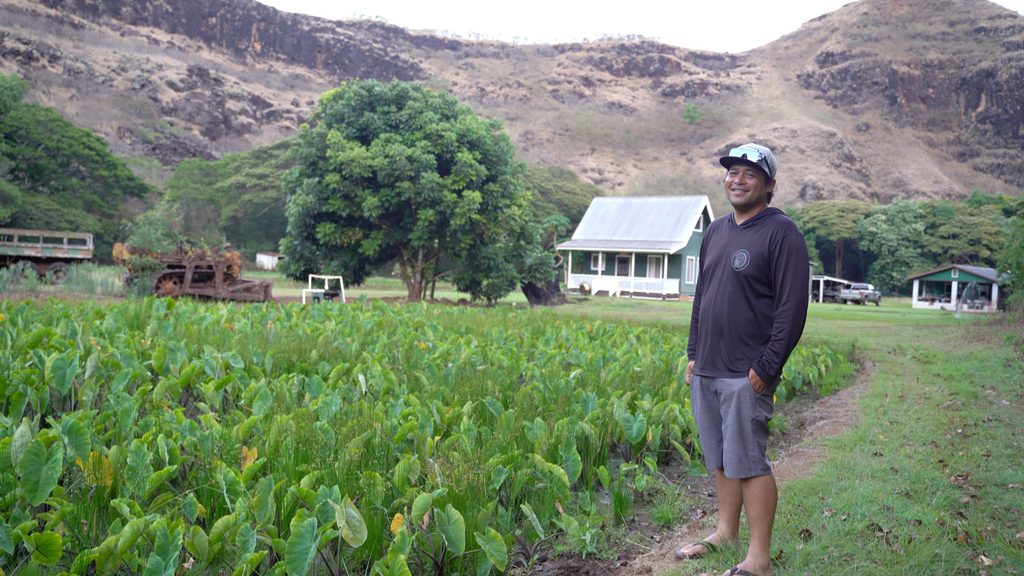
Taro is a plant with large heart-shaped leaves and an edible, starchy stem. For over a millennium, it has been Hawai‘i’s mainstay food.
Adam Asquith, a taro farmer who was recently licensed 100 acres from the Agricultural Development Corporation, says that the agency “cannot shed the skin of the plantation.” It continues to rely on historic plantation maps that divide the former sugar land into industrial-scale fields of 50 or 100 acres, more than small farmers like him can handle.
Before he can begin taro farming, he expects to spend up to two years clearing overgrown land and repairing the water system that will support his taro crop.
So far, none of the farming in the area generates the kind of revenue that plantations once did. The budget is very tight for undoing damage done by 19th century transformations of the land.
A compromise promised to return water to the streams
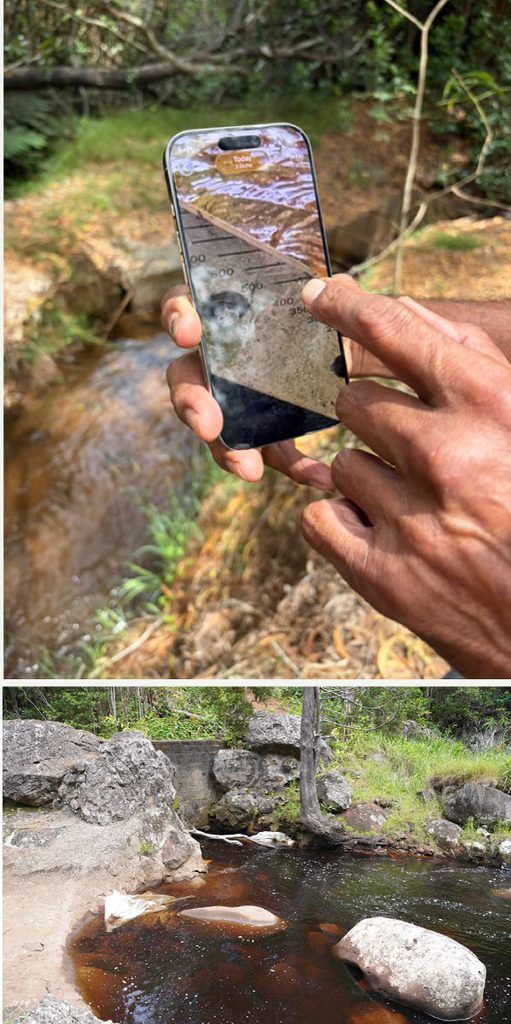
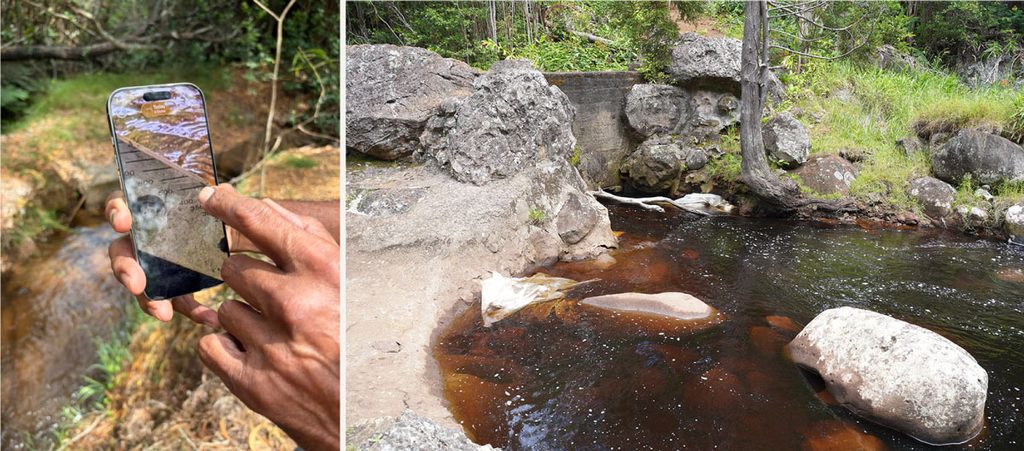
The Kekaha Ditch diverted between 97 and nearly 100 percent of the Waimea River’s flow.
The Mediation Agreement of 2017 was prompted by persistent stream diversions across the Waimea River watershed, even after commercial sugar plantations shut down in 2001. Agricultural cultivation dropped sharply, yet the state landowner and its managers continued to divert Waimea River flows in amounts comparable to those of the days of the sugar plantation.
Streamflow measurements by the U.S. Geological Survey confirmed that the Kekaha Ditch diverted between 97 and nearly 100 percent of the Waimea River’s flow, reducing downstream levels to as little as 10,000 gallons a day. Much of this water was discarded or lost through system leaks.
A generation ago, as recently as the 1990s, residents could jump into swimming holes as much as 15 feet deep. Now, nowhere is the depth more than a foot in these hollows. In 2013, alarmed local residents formed a community organization they call Pō‘ai Wai Ola – which in Hawaiian, translates to “encircling water of life” – to challenge the continued diversions and reverse their impacts.
“When the plantations closed, we thought, oh, they were just going to throw all the water back because they’re not using them, right? And they didn’t. They just kept taking the water,” said John A’ana, vice president of Pō‘ai Wai Ola, also known as the West Kaua‘i Watershed Alliance.
Represented by Earthjustice attorneys, community members petitioned the Hawaii State Commission on Water Resource Management (CWRM) to restore natural stream flows. To avoid years of costly litigation, the primary parties entered mediation. Earthjustice represented the community group Pō‘ai Wai Ola in negotiations with the ADC, KAA, Kaua‘i Island Utility Cooperative (KIUC), and the Department of Hawaiian Home Lands.
“When the plantations closed, we thought, oh, they were just going to throw all the water back because they’re not using them, right? And they didn’t. They just kept taking the water.”
John A’ana, Pō‘ai Wai Ola/West Kaua‘i Watershed Alliance
Executed in April 2017, the landmark Watershed Mediation Agreement established binding Instream Flow Standards for the Waimea River watershed.
The agreement capped agricultural intake, mandated minimum instream flows – including at least 10 million gallons daily through key stream convergences. It also required the installation of automated gauging and monitoring hardware to safeguard native aquatic ecosystems while providing realistic water allocations for local farming. The utility, KIUC, and the farm agency, KAA, each thought the other should do this, as KAA is the ditch operator, but KIUC was expected to take over for the hydroelectric project.
According to critics, neither did. Mike Faye, manager of the KAA, the agriculture association, disputes this characterization.
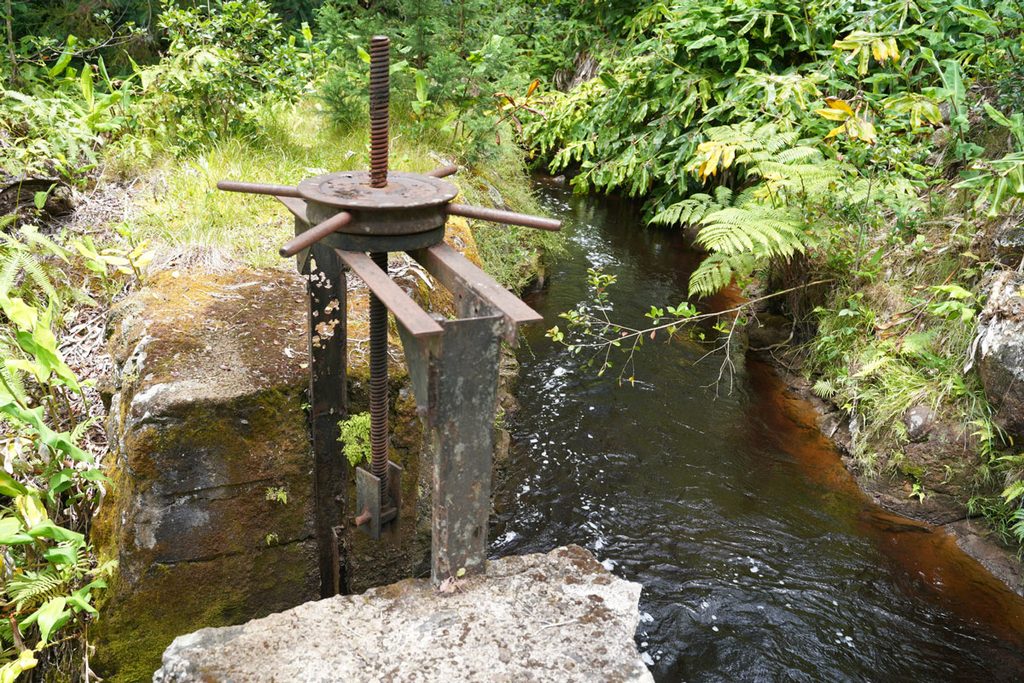
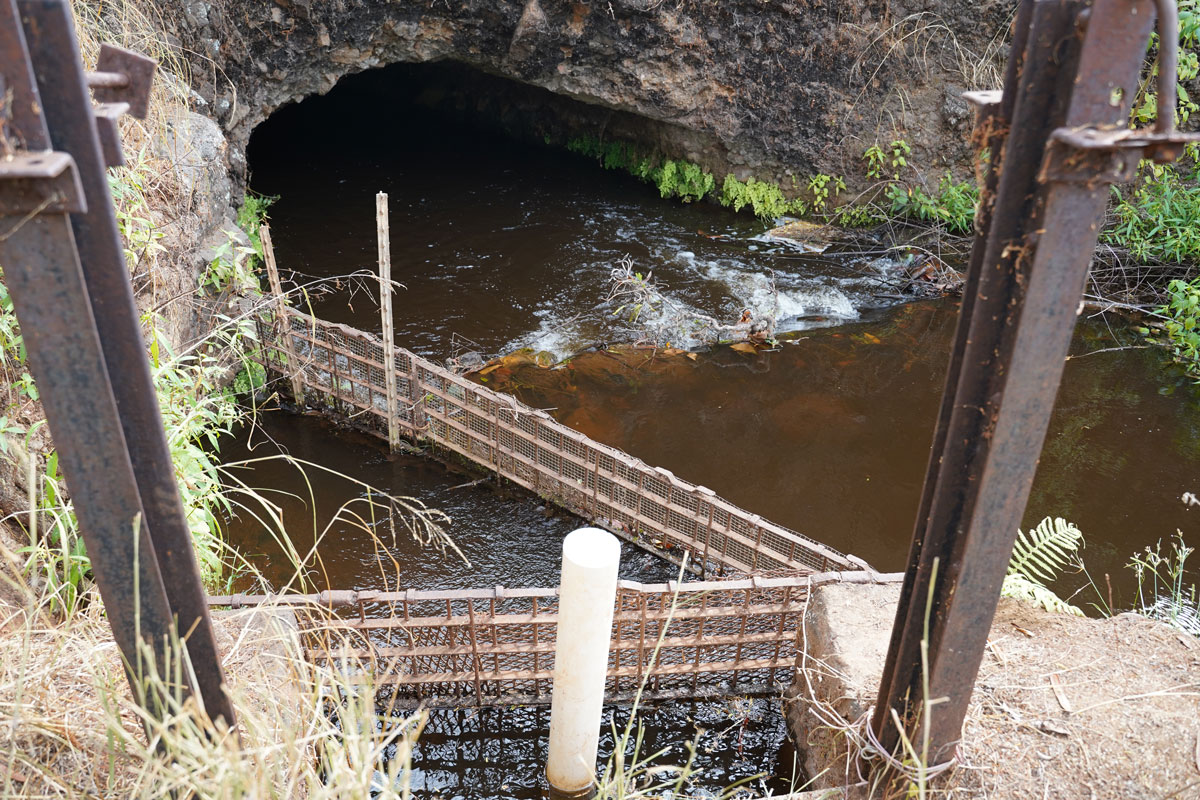
He says that the KAA reset “stop logs” (control devices) at Waiahulu and Kōke‘e streams to allow at least 10 million gallons to remain in the Waimea River, and at stream intakes on the Kōke‘e ditch and made adjustments to the system to return required flows to the streams. “The required monitoring has taken time to install,” he wrote, “however the prime monitoring for the Kekaha Ditch was installed at Hukipo (a monitoring station location) in a timely manner.”
Bryant from Earthjustice says that it would have been easier for the agricultural coop to install the monitoring equipment, “ADC [the state landowner]/KAA would have easily been able to do it as part of ‘maintenance activities’ that are exempt from obtaining a Stream Channel Alteration Permit.” whereas [the utility] KIUC didn’t have the same right of access.
“Nobody got everything, but it was a great compromise.” said Faye. But while the parties all tend to be more satisfied with the current approach to diversions than they were before, some still feel that the water division remains inequitable.
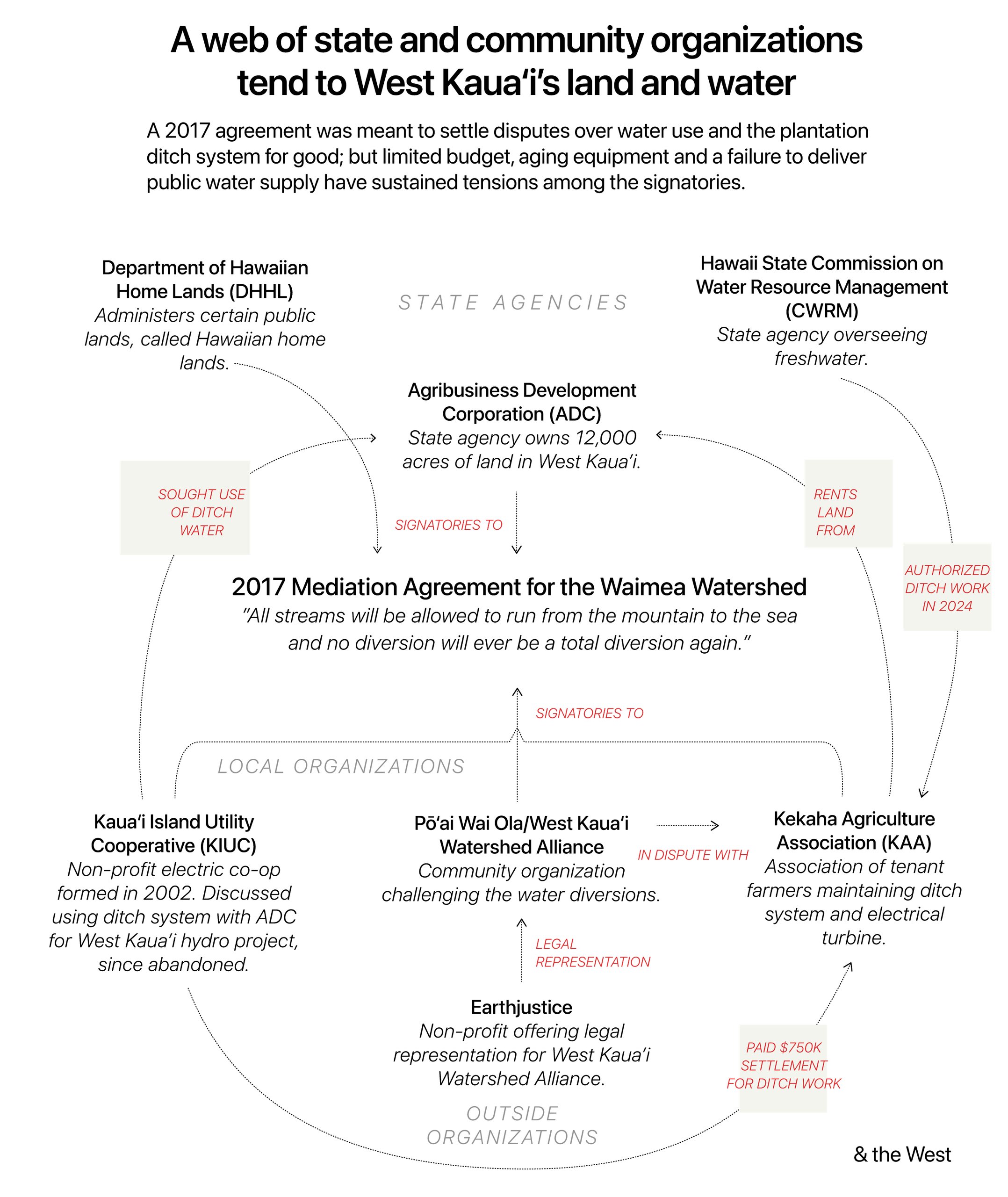
A web of state and community organizations tend to West Kaua‘i’s land and water
A 2017 agreement was meant to settle disputes over water use and the plantation ditch system for good; but limited budget, aging equipment and a failure to deliver public water supply have sustained tensions among the signatories. Rotate screen to enlarge.
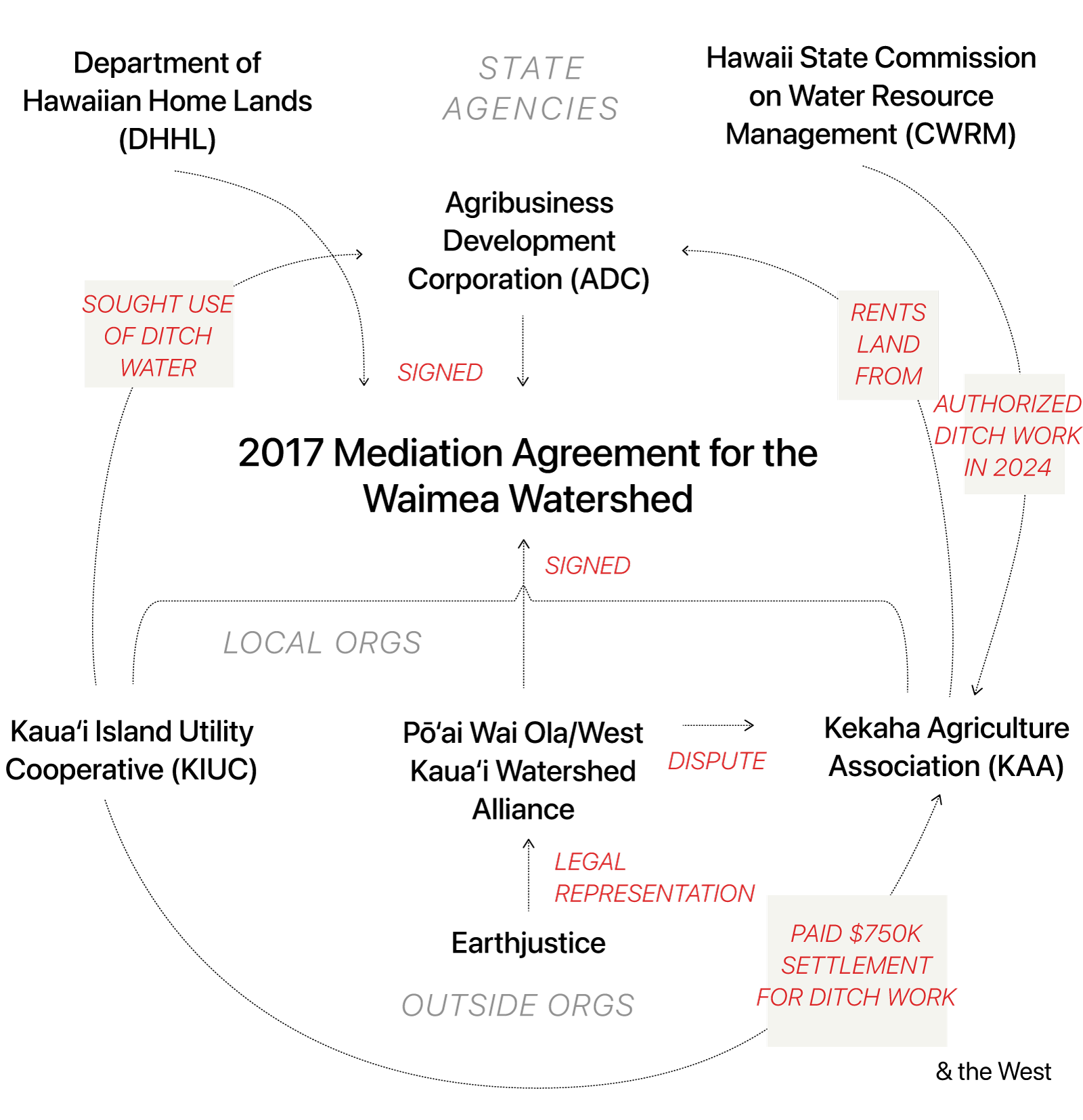
A new fight over an old water system
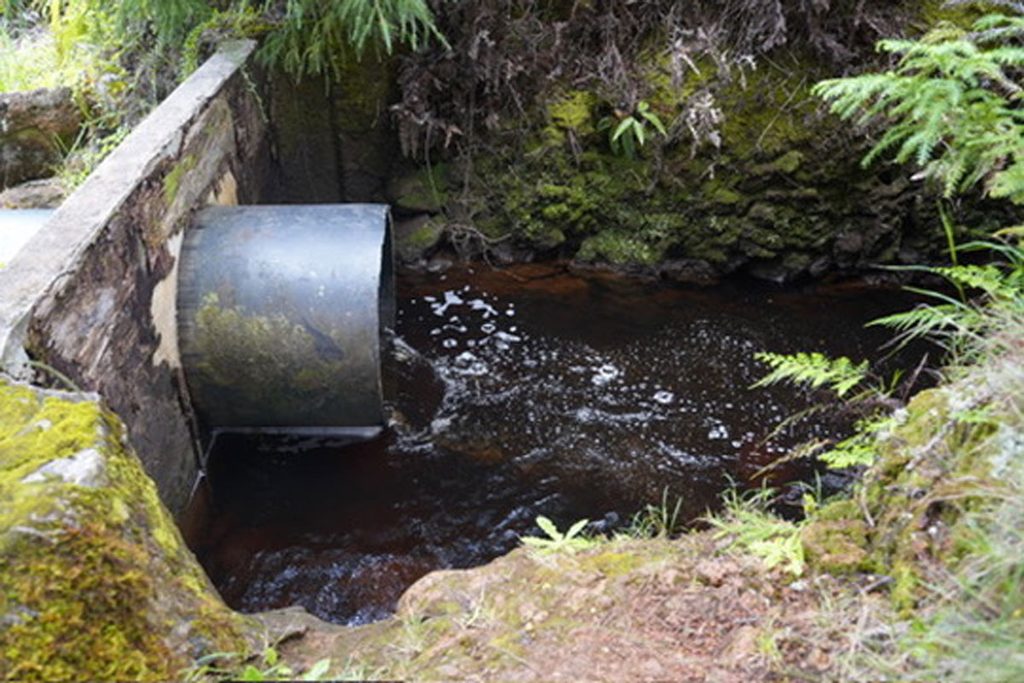
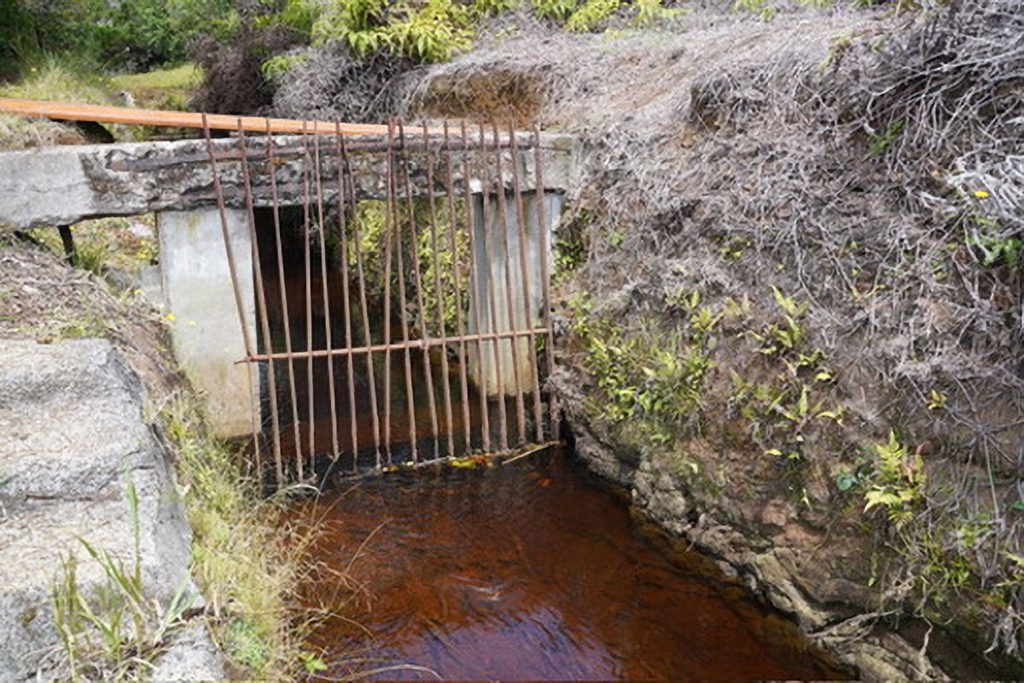
Of the settlement, KAA’s Michael Faye said it was a move away from his family’s historic way of running things. Faye’s grandfather, Hans Peter Faye, was a pioneer Kaua‘i sugar planter, and his uncle managed the Kekaha Sugar Company. “My ancestors did the same thing,” Faye said. “We want water. We take all the water.”
He now is working to rectify the same traditional plantation-era diversions that were built to capture 100 percent of stream flows. Faye assumed management very soon after the agreement was signed. “I do think we’re trying to do it right,” he said.
But it isn’t working, say the Earthjustice partners in the mediation. Under the terms of the agreement, Earthjustice’s attorney, Elene Bryant, said they wanted to “see what’s flowing into these diversions so that we can track what they’re diverting, [and see] if it’s matching up with their end uses on the system.” None of that water accounting has happened to date, she said.
Part of the delays were related to plans for the West Kaua‘i Energy Project, a proposed hydroelectric system that would use water from the upper Kōke‘e Ditch. Between 2017 and 2024, the utility cooperative responsible for the project and the corporation who owns the lands – the state Agricultural Development Corporation, or ADC – discussed transferring the upper ditch system’s water to the utility. But the transfer was never completed.
Beth Amaro, the Kaua‘i Island Utility Cooperative’s member services and communications manager, said in an email that the transfer was contingent on a long-term lease with ADC. After the community group’s challenge to the environmental assessment, “a long-term lease with ADC was never executed, and the ditch system was never transferred to KIUC [the utility],” she wrote.
The breakdown came over the utility’s plans to use water to generate electricity, which were twofold. The first, initially supported by the community, was set to be a closed-loop pumped-storage system for the hydro project, which would circulate water between reservoirs rather than continuously diverting it.
But the project also had a flow-through component, which would have diverted additional water through hydroelectric turbines and discharge unneeded water onto the Mānā Plain. The proposed system could have diverted an average of 11 million gallons per day, and up to 26 million gallons per day, from streams feeding the Kōke‘e Ditch.
When the community group realized this, it balked. “All of a sudden, there’s a flow-through portion of the hydro where they just throw the water away,” Pō‘ai Wai Ola’s John A’ana said. “We’re all for renewable energy, but we’re not for wasting water.”
Pō‘ai Wai Ola and Earthjustice challenged the project’s environmental review, arguing that it required a comprehensive Environmental Impact Statement rather than the less rigorous Environmental Assessment. The electric co-op determined that the proposed pumped-storage project was not feasible without the flow-through component, and formally abandoned the hydro project and withdrew from the mediation in late 2024.
The cancellation ended planned upgrades and repairs for the Kōke‘e Ditch System, and also ended plans to provide water to Department of Hawaiian Home Lands beneficiaries.
Repairs still stalled
“In an ideal world, the gates [to monitor the streamflow] would have been in by now, but they’re not easy to get in.”
Dr. Basil Gomez, hydrologist working for the KAA co-op
In November 2024, the CWRM, the state agency that manages freshwater resource operations, formally gave KAA, the agricultural association responsible for the water-delivery system, authority to modify the ditch system. The manager of KAA reports that completing monitoring and intake modifications would cost $2 million. The association ultimately accepted a $775,000 settlement from KIUC, the utility, to perform the work themselves.
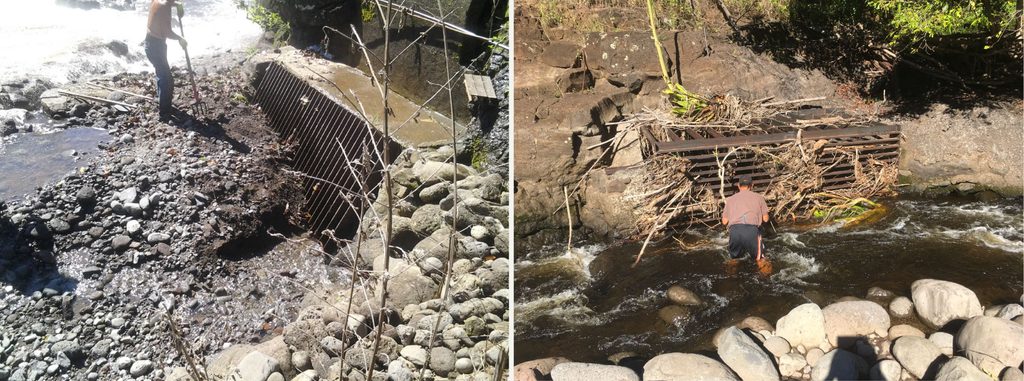
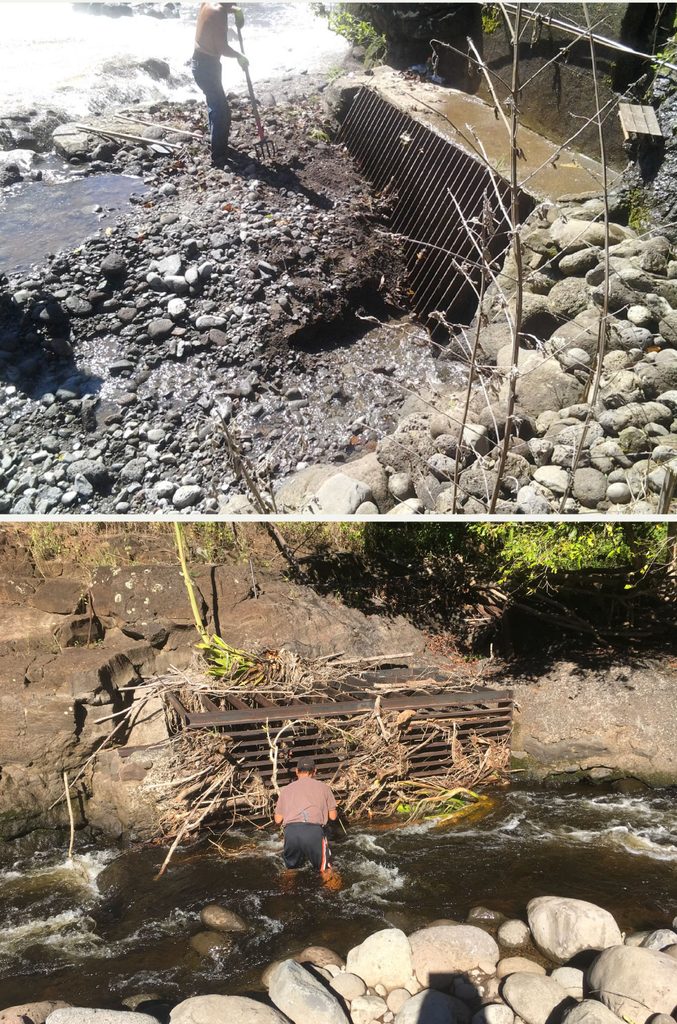
“In an ideal world, the gates [to monitor the streamflow] would have been in by now, but they’re not easy to get in.” said KAA’s hydrologist, Dr. Basil Gomez.
Money was not an issue: permit transfers and funding from the utility were finished in late 2024, but the physical installation of the automated gates remains stalled. Why? According to Gomez and Faye, the logistical challenges of working in remote terrain and the precision required to ensure the new gates fit into the existing diversion structures. The 1,200 pound gates also required a six-month fabrication lead time, arriving on-island in late 2025.
Installations have since hit a standstill because the local heavy-lift helicopter typically used to lower the equipment onto the stream foundations is currently out of service. Alternatively, hauling the gates using a heavy crane requires completely dry ground, but persistent rain in recent months has left the rural Kōkeʻe access roads too muddy for heavy machinery.
To Bryant, the Earthjustice attorney, these barriers “are the same excuses KAA has been making since I took over this case in 2021,” she said.
In a follow-up agreement struck since the utility company pulled out of the initial agreement, a timeline called for completion of the required modifications by 2026. “As you can see, we are way behind schedule.” Bryant says.
In an email, ADC said five monitoring points had been installed along the Kōke‘e Ditch system, with a sixth scheduled for installation in 2026. The corporation also said three mechanical gates were being installed, with plans for two additional automated monitoring systems.
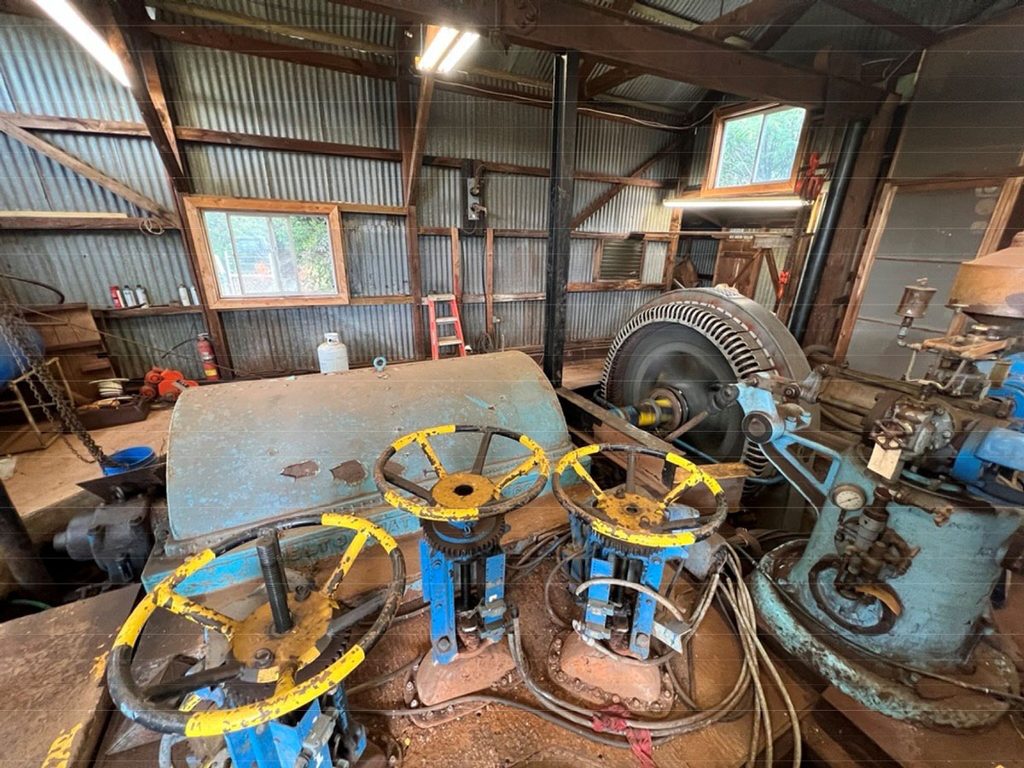
The delays are not the only point of disagreement between KAA and Earthjustice. The two also dispute whether KAA’s continued operation of the Waiawa power plant complies with the 2017 watershed agreement.
According to Bryant, the agreement required KAA to either decommission the plant, shutting it down, or to refurbish it so that it could operate with less water flowing through the ditch system. Instead, KAA installed a new turbine. Earthjustice says that the turbine’s water requirements exceed current agricultural demand, which Bryant said is below 2 million gallons per day.
“They’re spending all of this money to continue running this plant,” Bryant said, calling it “in clear violation of the terms of our agreement.”
KAA manager Mike Faye disputes this, saying that the new turbine can generate power at lower flows than the old system, which required about 6 million gallons per day to operate. The turbine, he said, also powers agricultural wells and water distribution.
“We wanted a system that performed at its highest capacity” between 6 and 10 million gallons per day, Faye said, “but could also operate down to 2 million.”
Faye said current agricultural use reflects a previous phase of seed-corn cultivation with lower water use: only 2 to 3 million gallons per day were applied to fields. He expects demand to increase as agriculture diversifies.
Water levels have increased
Since water releases have increased, stream flow in the Waimea River has visibly improved. “We get more water now in Waimea River than we had at that time” said John A’ana, the vice president of the community organization.
The state agricultural development corporation ADC, which works with KAA to manage and maintain the ditch systems and owns much of the former plantation land, said in an email that water diversions have declined from “a little over 30 million gallons a day down to about 6–8 MGD.”
The same water system that changed the river also shapes how people can farm the valley.
John A’ana is a generational taro farmer working with the community organization, and he spent summers learning the practice from his uncle Barney with his cousins. The area where he grows taro today alongside other farmers, he said, was once filled with wetland taro all the way to the far end of the valley.
His brother, Jim A’ana, gets his water to grow taro directly from the Waimea River, diverted through the plantation-era Kekaha Ditch, which now supplies water to the traditional Menehune Ditch. This ditch provides the water supply for taro farmers, kuleana (rights) owners, and residents in lower Waimea Valley. The Menehune Ditch historically drew directly from the Waimea River, but decades ago the Kekaha Sugar plantation redirected this connection and instead began to supply the ditch through a 6-inch pipe coming down the valley wall from the Kekaha Ditch.
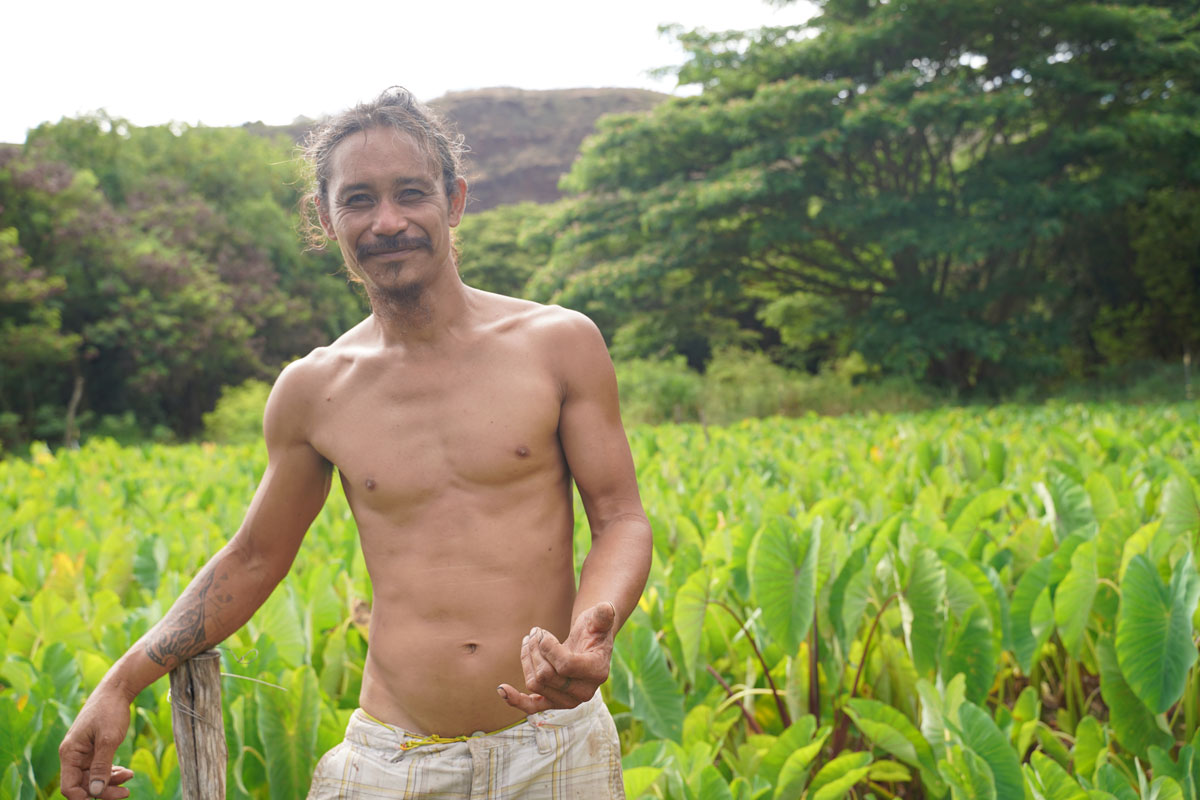
Users’ shares of water from the Menehune Ditch remain capped, preventing farmers from expanding taro acreage if they wanted to. Thelson A’ana, his son, who takes care of the taro patch says “I get enough water now, but any less, and I wouldn’t [have enough.]”
Today, there may not always be enough water
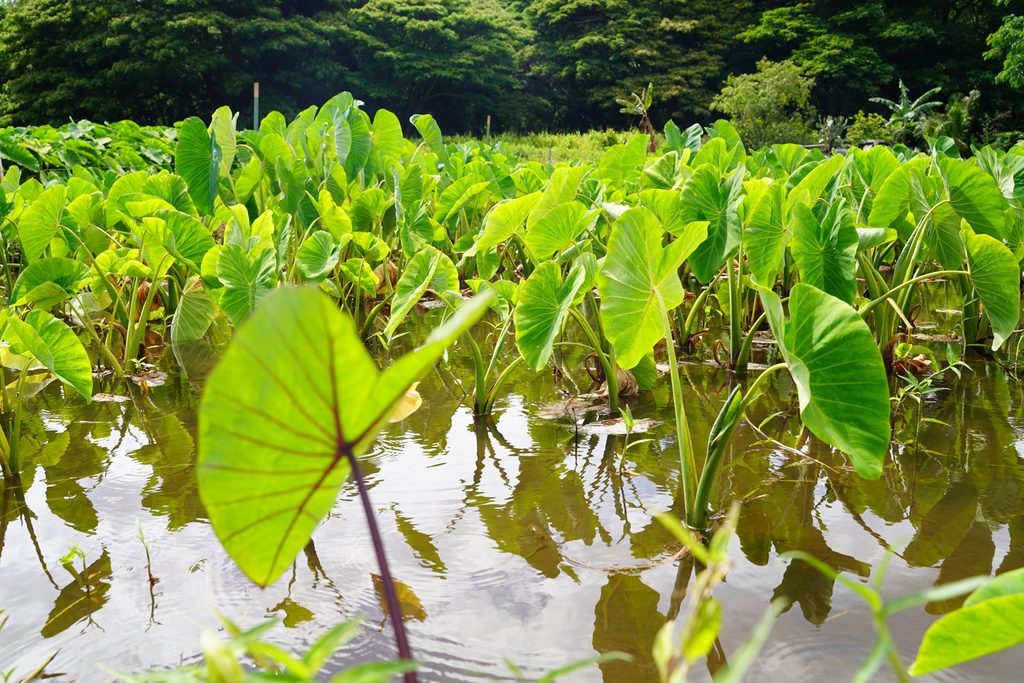
But even establishing how much water should remain in the streams can be irrelevant if not enough water is available – an increasingly prevalent situation.
“We still have to work out how much water remains in the ditch, and is diverted to the stream at particular times, particularly during the dry period,” Gomez said.
In the upper watershed, during the dry summer months, Kawai Koi Stream provides much of the available water, Gomez said. But there is not enough water in the system to simultaneously satisfy the Interim Instream Flow Standards, or IIFS, and maintain the amount of water needed in the ditch.
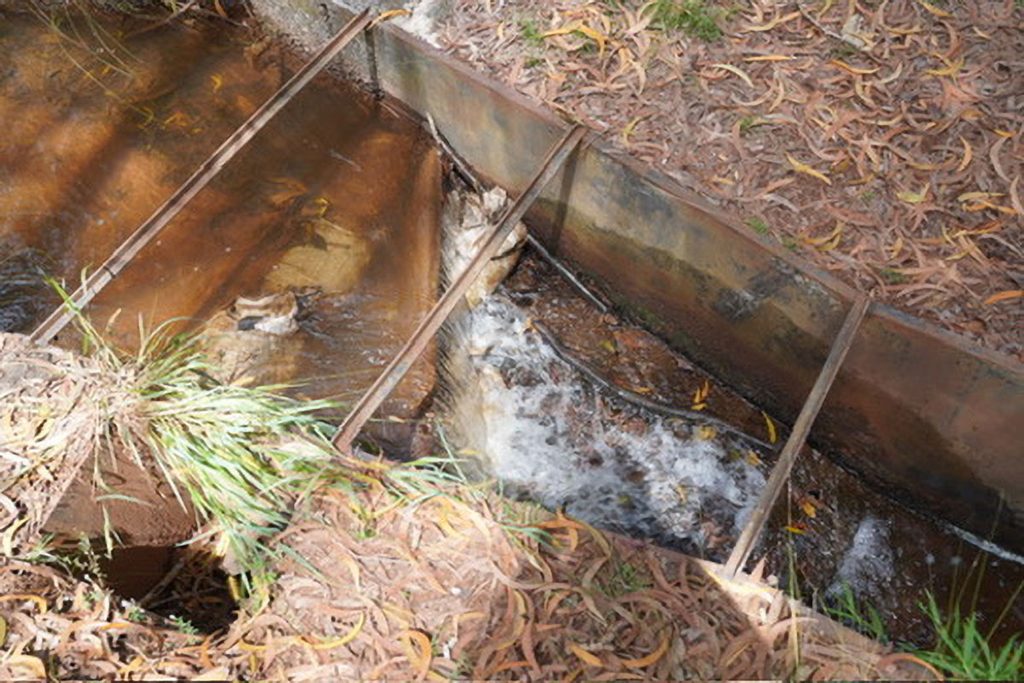
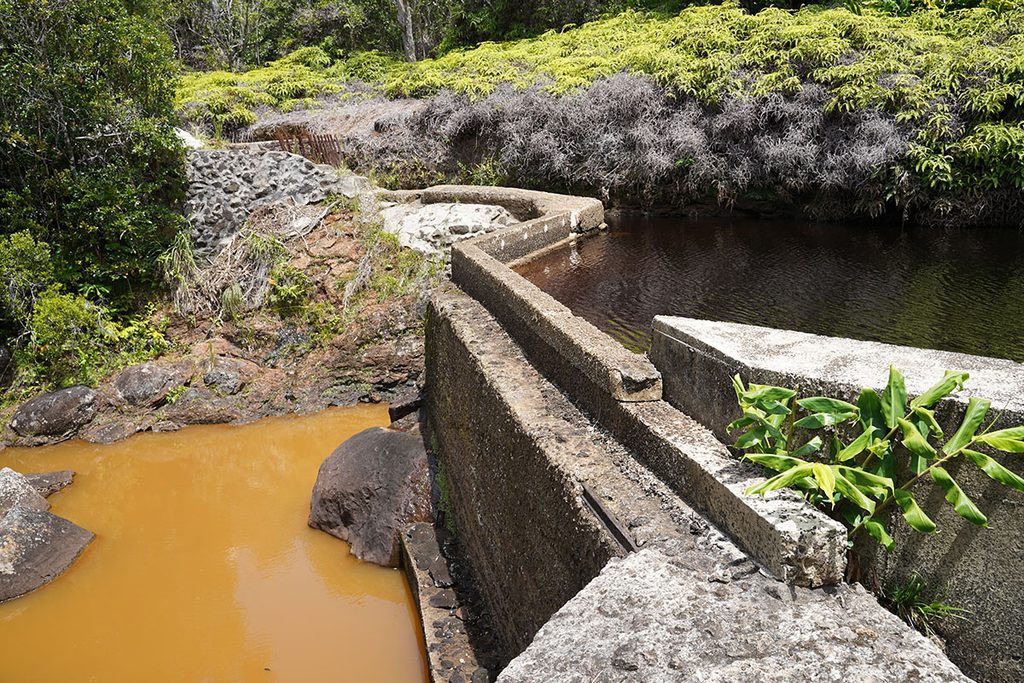
Gomez said stream flows are typically lower than the levels established by the IIFS themselves. And those standards “don’t reflect current conditions,” he said, as they were based on streamflow information collected more than a century ago.
The result is a system trying to divide water according to standards established from a historical landscape, while operating in a watershed that may no longer produce the same amount of water.
A plantation system built for one purpose now serves many
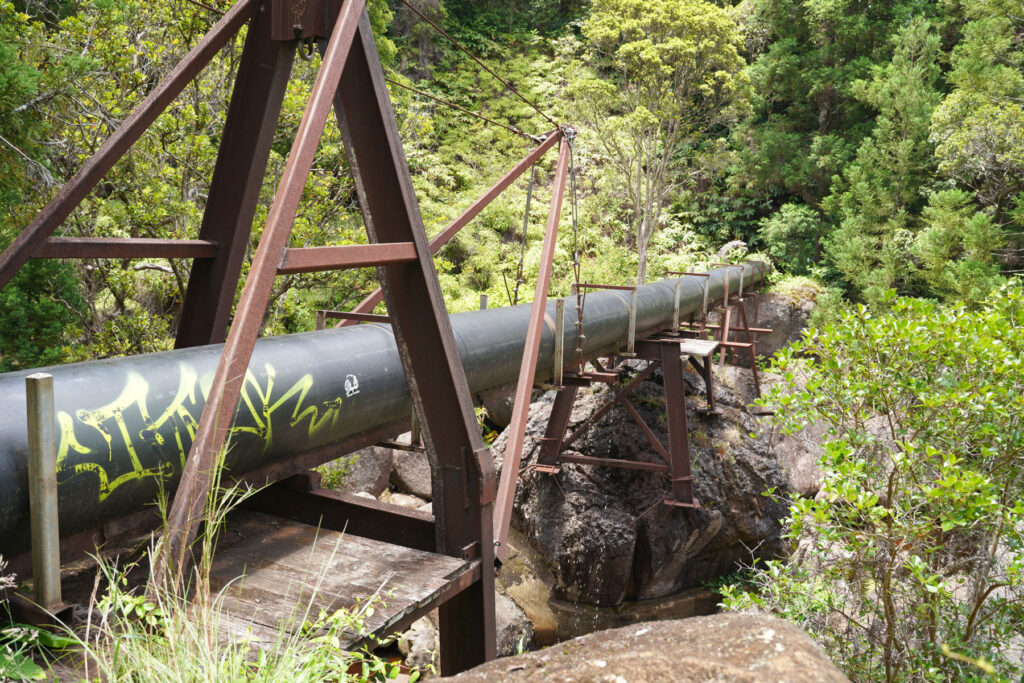
There is no longer a single purpose for the system even as an increasing number of actors need it.
That creates a problem for nearly everyone who depends on the system. Leaving water in the stream is necessary for aquatic ecosystems. Keeping water in the ditch is necessary for agriculture, cattle, and during summers with low water, trout fishing. And farmers downstream still need enough water to grow taro.
The difficulty is that there is no longer a single purpose for the system even as an increasing number of actors need it.
William Tam, a lawyer and co-author of Hawaii’s 1987 State Water Code, sees the Waimea agreement as an early attempt to move the state’s water management away from that historical model. “Water interconnects every aspect of our lives,” he said, and that water management must account for “climate change, economic, environmental and social realities,” rather than relying on historical arrangements created for plantation agriculture.
Still, the plantation infrastructure has been there for so long and its operations are so deeply ingrained into how things work that figuring out how to replace it is hard, even though it does not work for today’s farmers, fish, and industry. But nobody in West Kaua‘i knows exactly what that new system should look like, and if the system will change at all.
Tam thinks it makes no sense to restore the plantation system to working order. “Something entirely new will be required.”
Before plantations, Hawaiians managed water by experimenting, like making mid-course, mid-season corrections to adjust to nature. Mimicking this method, “the way forward will require careful attention and regular adjustments.” he concluded.

Edited by Geoff McGhee and Felicity Barringer.
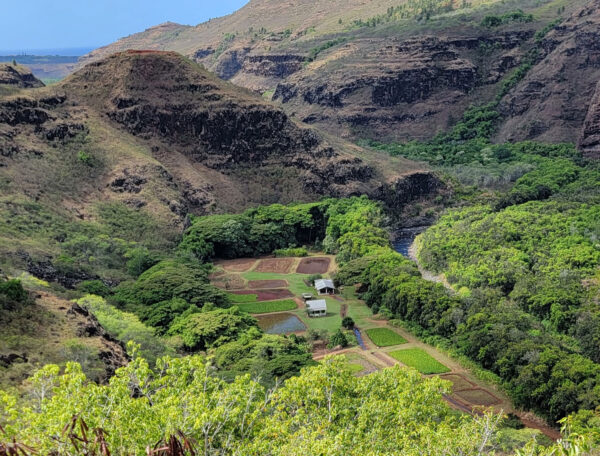
Can a century-old water system built for vast sugar plantations serve Kaua‘i’s diversified present?
On the island’s less touristy and more arid West side, farmers try to clean up the messy footprint of colonial agriculture.

Horses are still intertwined in the tapestry of the West
Their place in the region’s culture and economy has changed. Horse specialists like Curt Pate ensure some still play their old ranching role.

To restore western lands, regenerative ranchers keep cattle on the move
This practice is embedded in some ranches around the West, but it only spreads in fits and starts.

Small farmers bear an extra burden as California agricultural policies respond to a changing climate
Four out of five agricultural operations in the state are small farms, but many rules, from labor law to water resource planning, were designed for industrial-size players. Can the state make room for small and diverse businesses to succeed?

Native agriculture never went away. Now it is on the rise.
Despite persistent efforts by the U.S. government to eradicate Indigenous farming and ranching practices, they are regaining currency in an American West stressed by drought, diminishing resources and climate change.

Small Farmers Wait for California’s Groundwater Hammer to Fall
Farmers, large and small, are beginning to grapple with what the Sustainable Groundwater Management Act means for them. Many expect to see cutbacks on pumping once the program is fully implemented in 2040.