
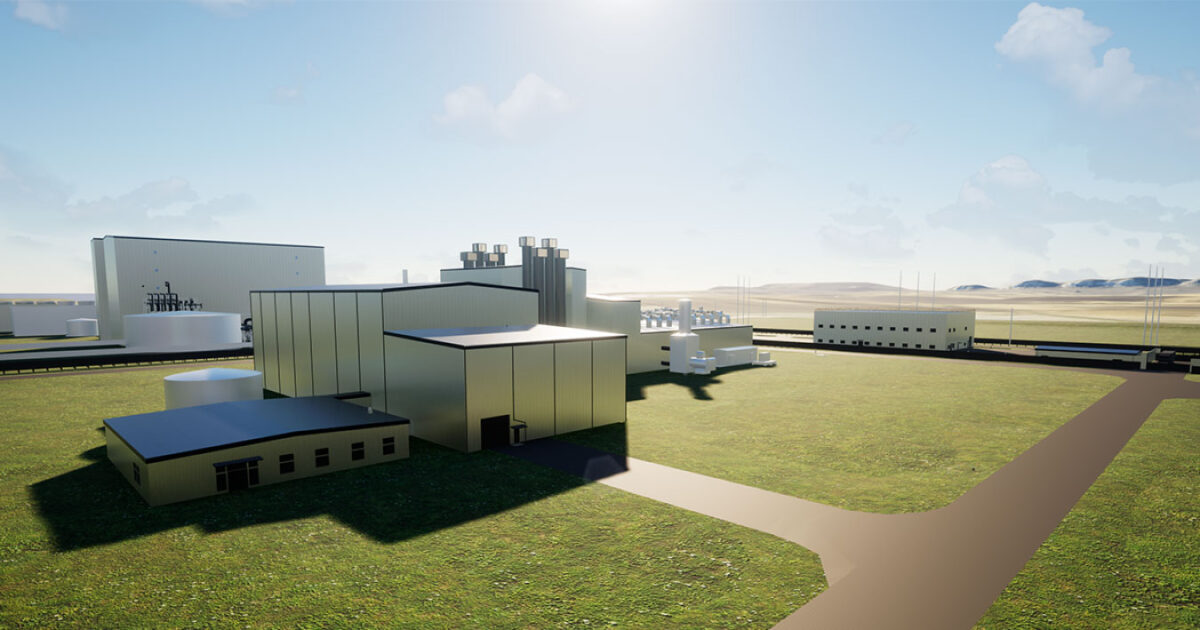
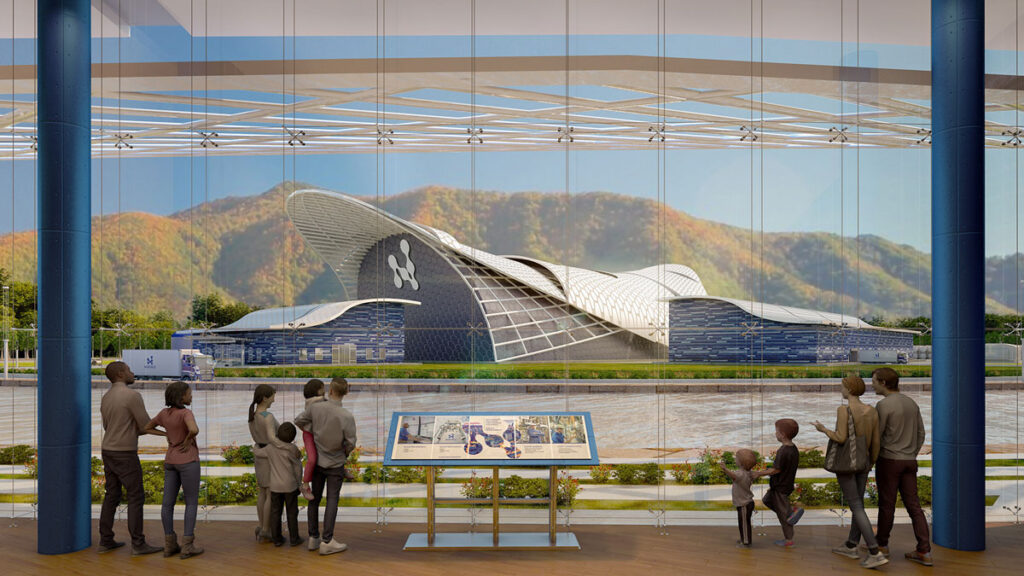
A rendering of TerraPower’s Natrium power plant, currently under construction in Kemmerer, Wyoming. TerraPower via U.S. Department of Energy
By Gabriel Nagel
The decades-long ice age for nuclear energy may have started around the summer of 1977, when more than 2,000 protesters converged at the Seabrook Nuclear Power Plant in New Hampshire. Many were barefoot. Some were students. Others were veterans of the civil rights movement and antiwar activists.
They called themselves the Clamshell Alliance, singing “It’s the nukes that must go and not me” and holding signs reading “Split Wood, Not Atoms” as they occupied the construction site of the $2 billion Seabrook Nuclear Power Plant. Their target wasn’t just Seabrook, but a nuclear future they believed would imperil generations to come.
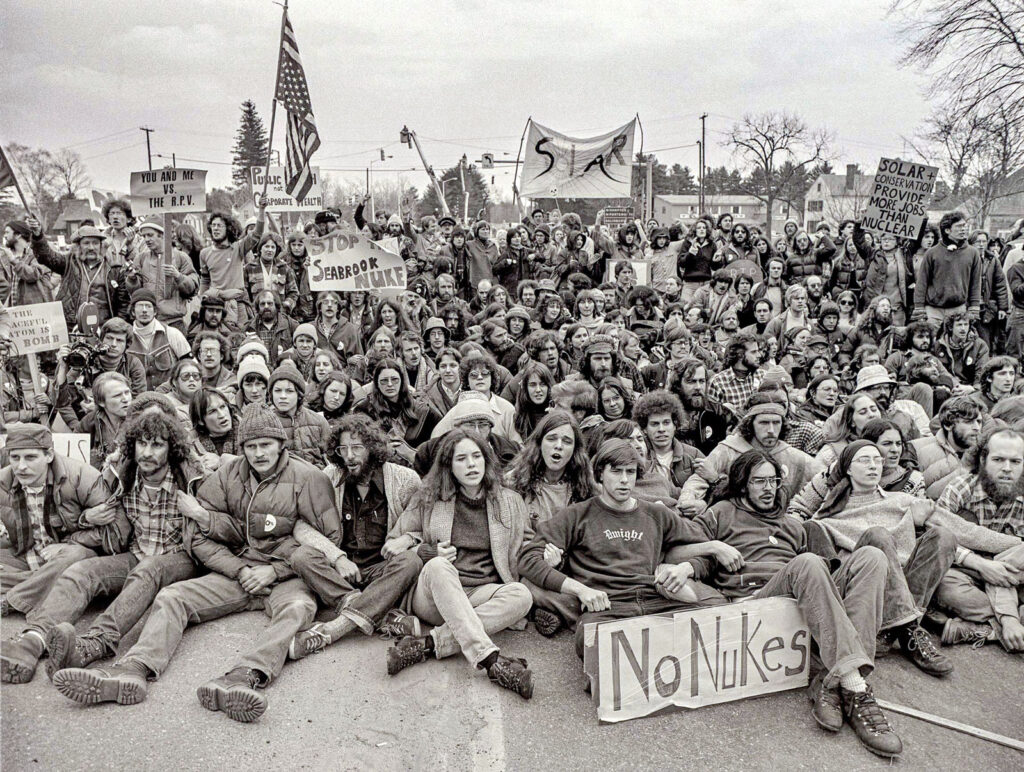
The anti-nuclear movement’s grassroots legacy has echoed across the American West and still lingers as a new generation of reactors, known as small modular reactors (SMRs), sparks renewed debate.
The anti-nuclear movement’s grassroots legacy has echoed across the American West and still lingers as a new generation of reactors, known as small modular reactors (SMRs), sparks renewed debate from Oregon to Wyoming over nuclear energy’s role in the transition from older power sources pouring greenhouse gases into the atmosphere to newer, cleaner ones. Today’s debate is shaped by a new context: the accelerating climate crisis. While past activists feared the risks of nuclear power, many now weigh those concerns against the urgent need for rapid decarbonization. The question is no longer just whether nuclear is safe, but whether it’s necessary.
Developers bill SMRs as cleaner, cheaper, and more flexible than their towering predecessors. TerraPower, a company co-founded by Bill Gates, backs them, and tech giants like Google and Amazon view them as a low-carbon solution to meet the skyrocketing energy demand, particularly for the growing number of data centers needed to meet the exploding demand for artificial intelligence.
To many tribal land stewards and anti-nuclear watchdogs, opposition to SMRs goes beyond reactor safety. Their concerns stem from a long history of mistrust of nuclear energy, shaped by accidents like Three Mile Island and Chernobyl, and extend to long-term waste storage, water use in drought-prone regions, and the broader question of what rural and Indigenous communities are being asked to sacrifice for power infrastructure they may never use.
With over 80 SMR designs and concepts in development globally, according to the International Atomic Energy Agency, and three SMRs actively under construction – TerraPower’s Natrium Reactor (named for the Latin word for sodium, the plant’s coolant) in Wyoming, Kairos Power’s Hermes Reactor in Tennessee and the Idaho National Laboratory’s much smaller Project Pele Microreactor – a sharp debate has emerged over whether SMRs are a viable clean energy pathway or merely repeat mistakes of the past.
A world of potential
The World Nuclear Association’s dashboard of Small Modular Reactors lists dozens of SMR projects announced, but only two (in Russia and China) categorized as in operation and five as under active construction (not including the TerraPower project explored in this article). Zoom out to see the global view.

Source: World Nuclear Association; Updated May 23, 2025
Do they trade safety, water, and local control for uncertain solutions to power a data-hungry future? Or are they a necessary element of that future?
Not so small: the technology behind SMRs
Unlike traditional plants built entirely on-site, designers intend SMRs to be assembled in factories and shipped to their destination, theoretically reducing construction time and cost
Small modular reactors, or SMRs, are a class of nuclear fission reactors typically designed to generate less than 300 megawatts of electric power, about one-third the size of a conventional nuclear reactor, according to the United States International Trade Commission. Many SMR design principles trace back to U.S. Navy submarine reactors, which have run safely for decades in marine environments. That naval pedigree suggests robust core reliability, though land-based SMRs still face new licensing and cooling challenges.

Unlike traditional plants built entirely on-site, designers intend SMRs to be assembled in factories and shipped to their destination, theoretically reducing construction time and cost, as well as enabling the deployment necessary to support large systems like data centers that inherently require high power density.
“We have a plant that will on average be half the cost per gigawatt of today’s technology, and the way we do that is simple: we just worked on a technology that had less steel, less concrete, less labor per megawatt generated.”
TerraPower CEO Chris Levesque
The pitch from SMR developers is straightforward: these reactors will be safer, cheaper, faster to deploy, and better suited for flexible, distributed energy needs, especially in places moving away from coal. As TerraPower’s CEO Chris Levesque put it in a recent speech, “We have a plant that will on average be half the cost per gigawatt of today’s technology, and the way we do that is simple: we just worked on a technology that had less steel, less concrete, less labor per megawatt generated.” Levesque’s “half-cost” reference is to upfront construction only, not lifetime operating costs, so an SMR remains a multi-billion-dollar build.
Still, the potential of SMRs is real. The United States International Trade Commission highlights that SMRs have applications in remote island regions and can adequately replace coal plants. They can support desalination efforts in drought-prone areas and contribute to hydrogen power generation.
The key to SMRs’ potential lies in their compact size, modular construction, and ability to deliver constant, high-density, zero-emission power in places where traditional reactors or renewable energy sources may be impractical. Problems arise, however, when the concept moves to construction.
Few cases illustrate that challenge better than TerraPower’s delayed plant in Wyoming.
A coal town pins its hopes on atomic energy

In Kemmerer, a city with a population of less than 2,700, nuclear power began eliciting a very different emotion than the anger of the Clamshell Alliance’s activists: hope. Tucked in Wyoming’s far southwestern corner, Kemmerer has ridden the booms and busts of fossil fuels for over a century. Here, the nation’s first J.C. Penney store opened in 1902, serving miners who dug coal to fuel the Union Pacific Railroad. Coal remained the king of the energy industry through the 20th century. Until the 2010s, the Naughton coal plant and nearby mine provided most jobs and tax revenue.
In the present day, however, market forces and climate policy are finally catching up to Kemmerer, leading to a familiar challenge facing small towns across the West: finding a way to survive after their foundational industry disappears. In 2020, PacifiCorp announced that Naughton would entirely shut down by 2025, far earlier than expected. The news hit like a funeral bell to residents.
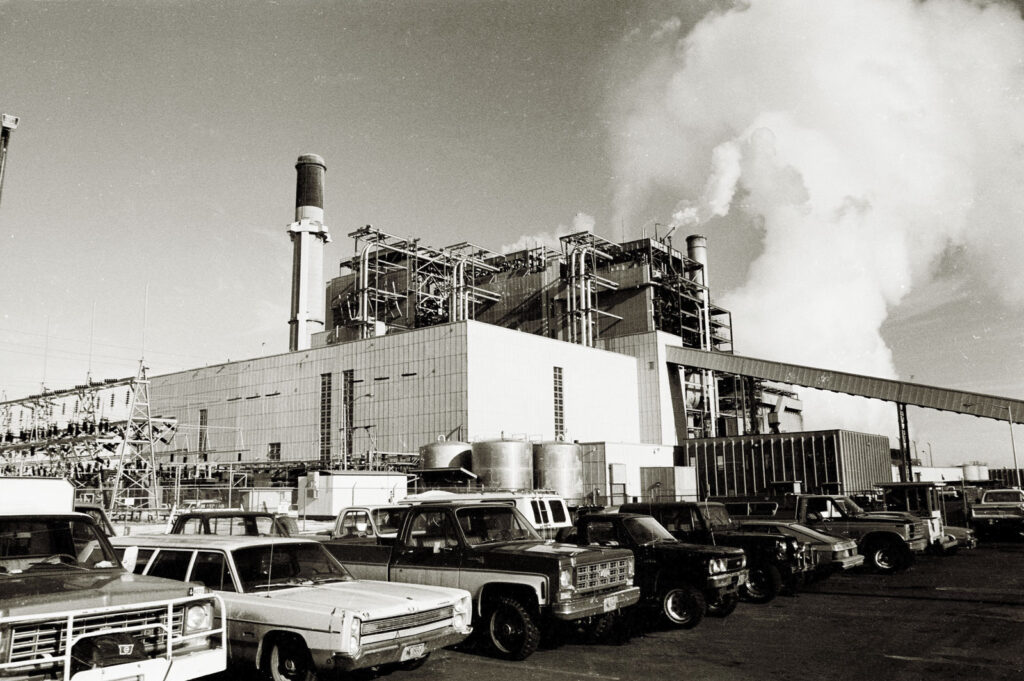
TerraPower proposed constructing its first Natrium reactor on the Naughton plant site, leveraging the existing grid connections and skilled workforce.
In 2021, John Sawaya, a longtime resident and retired shop owner of Kemmerer, told High Country News, “I’ve been watching the town for a lot of years, since the railroad stopped using coal, and they said the town was dead then.”
Would younger workers move away? Could schools and hospitals survive the loss of revenue? Residents prepared for the worst.
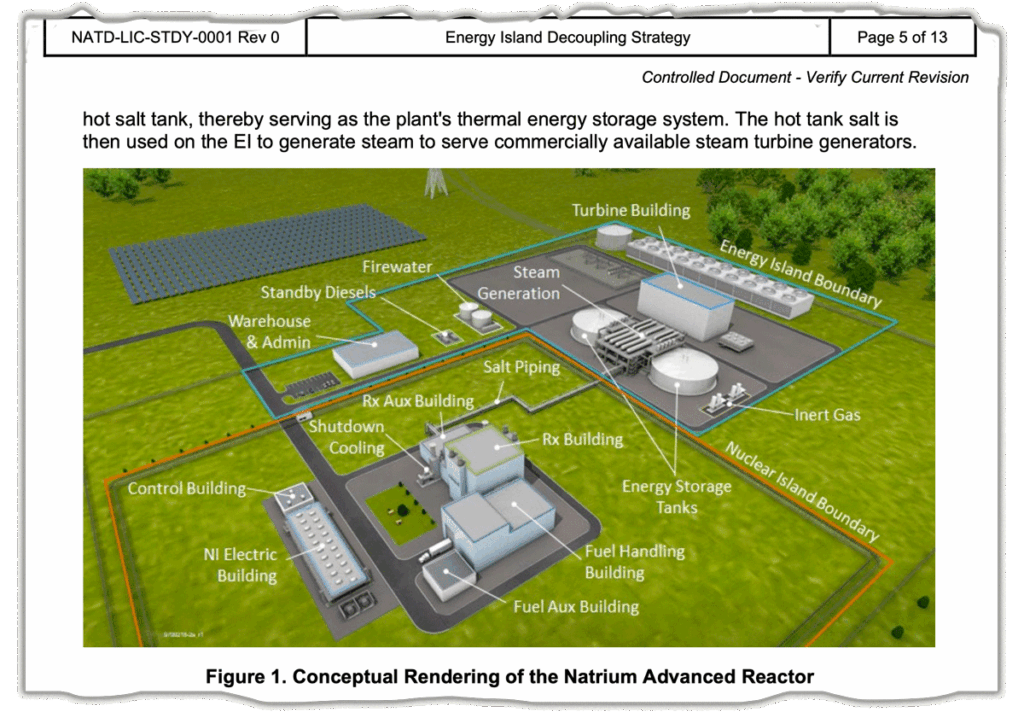
That was when TerraPower came into the story. In late 2021, Wyoming’s governor triumphantly revealed that Kemmerer had been chosen for an experimental “advanced” nuclear plant, beating out several other Wyoming towns that had volunteered for the project. TerraPower proposed constructing its first Natrium reactor on the Naughton plant site, leveraging the existing grid connections and skilled workforce. For many in Kemmerer, like Sawaya, the news was a relief. He told High Country News that “one thing after another seemed to come in and keep the place going.” This time, that thing was SMRs.
The project, ballyhooed by Gates, won broad support from local and state officials across party lines. Even some skeptics of climate change came around to the idea that if the country phased out coal, this would be the next best alternative. TerraPower promised around 2,000 construction jobs and 250 permanent positions, resulting in more total employment than the coal plant and mine had provided. Bill Thek, the mayor of Kemmerer, told NPR, “Our agenda isn’t to muddy up the planet by any stretch of the imagination. It’s to make a living.”
But that choice, between jobs and the environment, feels false to some and helps explain why not everyone in Kemmerer is at ease with the project. The Natrium reactor uses liquid sodium as its primary coolant, which developers say offers greater thermal efficiency than water. Yet sodium also carries risks: it can ignite on contact with air or water, raising safety concerns among residents. Others are focused on water use more broadly. Despite its sodium design, the plant will still require cooling for its power-generating turbine, likely drawing from the already strained Hams Fork River or nearby aquifers — a troubling prospect in a region increasingly shaped by drought.
TerraPower insists its design dramatically reduces water needs compared to traditional water-cooled nuclear reactors. It has created a report showing that because the Natrium system relies on liquid sodium instead of water to cool the reactor core, the heat stored in molten salt can then be converted into backup power, reducing reliance on conventional, water-intensive cooling methods. While water is still needed for the steam generation process, this shift lessens strain on local water resources, a key concern in drought-prone regions, and reduces the potential for contaminated cooling water to escape the plant, a common vector for environmental exposure in older reactor designs.
Nevertheless, the environmental nonprofit Columbia Riverkeeper has noted that existing government policies often “try but fail to prevent more radioactive releases into the soil and groundwater” in communities, citing decades of plutonium production at Washington’s Hanford site as proof. According to the Nuclear Regulatory Commission (NRC), there remains a substantial risk of environmental contamination both at Kemmerer itself as well as extraction sites of fuel for the Natrium reactor.
Environmental concerns added to broader doubts about the project’s feasibility and timeline. TerraPower initially aimed to open the Natrium plant by 2028, but that target slipped to 2030.
Environmental concerns added to broader doubts about the project’s feasibility and timeline. TerraPower initially aimed to open the Natrium plant by 2028, but that target slipped to 2030 after Russia’s invasion of Ukraine disrupted access to the high-assay, low-enriched uranium (HALEU) needed to fuel the reactor. While TerraPower now plans to establish a domestic HALEU supply by enriching existing uranium, the project still awaits final approval from the Nuclear Regulatory Commission, which may not issue a construction permit until 2026.
Despite these challenges, Kemmerer has emerged as an example of a town largely supportive, or at least not dramatically opposed, to nuclear energy. As Kathy Karpan, a former Wyoming Secretary of State who “grew up in a coal mining family [with] coal in her blood,” told NPR, “the coal industry is disappearing. That is a painful truth that Wyoming people are perhaps reluctant to accept.”
While Kemmerer may cautiously embrace TerraPower’s promise of a cleaner future, the broader economic, environmental, and political consequences extend far beyond this small town.
“Why gamble on uncertain and expensive technology when wind and solar with storage are often cheaper?”
Kemmerer’s experience highlights a national debate: despite the optimism surrounding SMRs, their resurgence comes at a cost.
Kemmerer’s experience highlights a national debate: despite the optimism surrounding SMRs, their resurgence comes at a cost. Foremost concerns are issues of cost and timing, two barriers to traditional nuclear plants that SMRs have sought to overcome. Amory Lovins, a physicist and co-founder of Rocky Mountain Institute who has advised energy planners for decades, argues that nuclear energy simply can’t compete with faster, cheaper alternatives like solar and wind. Now, as SMRs are touted as a climate solution, he sees the familiar pattern of slow rollout, rising costs, and modest carbon gains that have led to a lack of success, and he remains skeptical.
While nuclear’s lack of carbon emissions is an essential feature , it is not sufficient, Lovins insists, explaining in an interview that “We need to count carbon and cost and speed. At actual market prices and deployment speeds, new nuclear plants would save many-fold less carbon per dollar and per year than cheaper, faster efficiency or modern renewables, thus making climate change worse.” Simply put, “the more urgent you think climate change is, the more vital it is to buy cheap, fast, proven solutions, not costly, slow, speculative ones.” In a later discussion of the issue, Lovins added:
The basic math doesn’t work. SMR advocates who discuss cost admit that early models will produce electricity at about twice (or more) the cost of electricity from today’s big new reactors. Authoritative compilers of observed market prices, like Lazard and Bloomberg New Energy Finance, reckon that those big reactors in turn produce electricity at roughly 3–13 times the cost of electricity from unsubsidized wind or solar power (let alone efficient use, which typically costs even less). And renewables are set to get another twofold cheaper by the time early SMRs could be built to support decisions about building factories to mass-produce them so they cost less. Multiply two times three-to-thirteen times two and you get 12 to 52. Mass production can never get anywhere near bridging that enormous cost gap.
Adding backup or storage to solar and wind power, so they can match the relative steadiness of a well-running nuclear plant, doesn’t materially improve nuclear’s uncompetitiveness, and may well make it worse. That’s because the unforecasted failures of thermal power stations (nuclear or fossil) are bigger, longer, more abrupt, and far less predictable than the routine variations in solar and wind power, so the thermal plants need even more backup.
While Lovins critiques SMRs for being too slow, costly, and inefficient to meet urgent climate goals, recent cost overruns highlight an even more pressing issue: economic viability. These challenges are no longer theoretical. NuScale Power, the Oregon-based startup behind the first SMR to receive NRC certification, struggled to deliver its flagship project despite receiving hundreds of millions in federal support, exposing deeper concerns about the practical feasibility of SMR deployment.
Originally envisioned as a 12-reactor, 720 MW plant, NuScale downsized the project to six modules, totaling 462 MW. In 2020, NuScale projected electricity costs at $58 per megawatt-hour (MWh), but by early 2023, estimates had risen to $89/MWh, and later reports indicated costs reaching $102/MWh. By comparison, a typical megawatt-hour cost for a thermal power plant is around $70–$90/MWh, and for low-cost hydropower in the Pacific Northwest, $30–$50/MWh. The total project cost ballooned from $5.3 billion to $9.6 billion, leading to the withdrawal of participating utilities and the project’s eventual termination, according to a report by the Institute for Energy Economics and Financial Analysis.
Notwithstanding NuScale’s experience, Kemmerer may embrace this speculative energy project with its promise of jobs. That approach may not translate to larger cities with greater energy demands, leaving TerraPower’s plant to serve as more of a testing ground than a scalable solution. Lovins asks: “Why gamble on uncertain and expensive technology when wind and solar with storage are often cheaper?”
Safety on a shoestring

Advanced SMR designs, such as X-energy’s, use “tri-structural isotropic (TRISO) particle fuel” pebbles that are touted as virtually indestructible.
The SMR concept does offer some theoretical advantages. For example, advanced SMR designs, such as X-energy’s, use “tri-structural isotropic (TRISO) particle fuel” pebbles that are touted as virtually indestructible. They are engineered not to melt down, even under extreme conditions, offering an additional margin of safety. Thanks to the reactors’ smaller size, developers can also construct SMRs with underground containment; this helps shield them from external threats, such as natural disasters, aircraft crashes, or sabotage, and reduces the risk of a catastrophic radiation release.
Recognizing the lower projected risk profile of SMRs, the NRC has already agreed to relax some emergency planning requirements. The need for quick evacuation of residents in case of a reactor problem has long vexed nuclear projects, especially in populous areas or island communities. The NRC’s looser regulatory approach for SMRs could tolerate a reduced evacuation zone around SMRs, so they could be sited closer to communities or industrial facilities, such as data centers, without dramatically compromising public safety.
Yet it is precisely these proposals for diminished safety requirements that alarm experts like Edwin Lyman, director of nuclear power safety at the Union of Concerned Scientists. On one hand, the industry is “pushed to cut costs in a whole range of different ways, mostly by eliminating or weakening safety and security systems that are present for operating reactors.” On the other hand, as Lyman added, “there is pressure on the NRC to speed things up, to water down its regulatory standards, to rubber-stamp new licenses…and that’s only accelerating now.”
The industry’s push to cut costs by reducing backup systems or thinning containment structures could make SMRs more vulnerable, not less, and potentially more dangerous than their promises imply.
The industry’s push to cut costs by reducing backup systems or thinning containment structures could make SMRs more vulnerable, not less, and potentially more dangerous than their promises imply. Recent moves to harden the facilities, like TerraPower’s plan to deploy “more security guards than there are law enforcement officers in Lincoln County,” signal an implicit recognition that the risks SMRs pose may be greater than advertised. Beyond the potential for political protests, an analysis by the Union for Concerned Scientists found most advanced nuclear designs to be both significantly less safe in general than conventional reactors and more vulnerable to terrorism and nuclear proliferation risks.
Comparing SMRs to conventional nuclear plants
“How [SMRs] Compare with LWRs [conventional light-water reactors] on Safety, Sustainability, and Proliferation Risk” – analysis from a 2021 report from the Union of Concerned Scientists. TerraPower’s Natrium reactor project in Kemmerer is listed second in this table.
| Non Light-Water Reactor Type | Safety | Long-Lived Waste Generation | Resource Efficiency | Nuclear Proliferation/ Terrorism |
|---|---|---|---|---|
| Sodium-Cooled Fast Reactors | ||||
| Conventional burner or breeder (Plutonium/TRU, with reprocessing) | Sig. Worse | Mod. Better | Better | Sig. Worse |
| Conventional– Natrium (HALEU, once-through) | Sig. Worse | Mod. Worse | Mod. Worse | Mod. Worse |
| Breed-and-burn mode (HALEU, once-through) | Sig. Worse | Mod. Worse | Mod. Better | Better |
| High-Temperature Gas–Cooled Reactors | ||||
| Prismatic-block (HALEU, once-through) | No data | Worse | Worse | Worse |
| Pebble-bed– Xe-100 (HALEU, once-through) | No data | Worse | Worse | Mod. Worse |
| Molten Salt–Fueled Reactors | ||||
| Thermal– IMSR/TAP (LEU <5% U-235) | Sig. Worse | Better | Worse | Worse |
| Thermal– Thorcon (HALEU/Thorium/U-233) | Sig. Worse | Worse | Better | Mod. Worse |
| Thermal– Molten Salt Breeder (HALEU/Thorium/U-233) | Sig. Worse | Mod. Better | Mod. Better | Sig. Worse |
| Molten Fast Salt Reactor (TRU/Thorium/U-233) | Sig. Worse | Sig. Better | Mod. Better | Sig. Worse |
Source: “‘Advanced’ Isn’t Always Better: Assessing the Safety, Security, and Environmental Impacts of Non-Light-Water Nuclear Reactors.” Union of Concerned Scientists
Toxic trade-offs
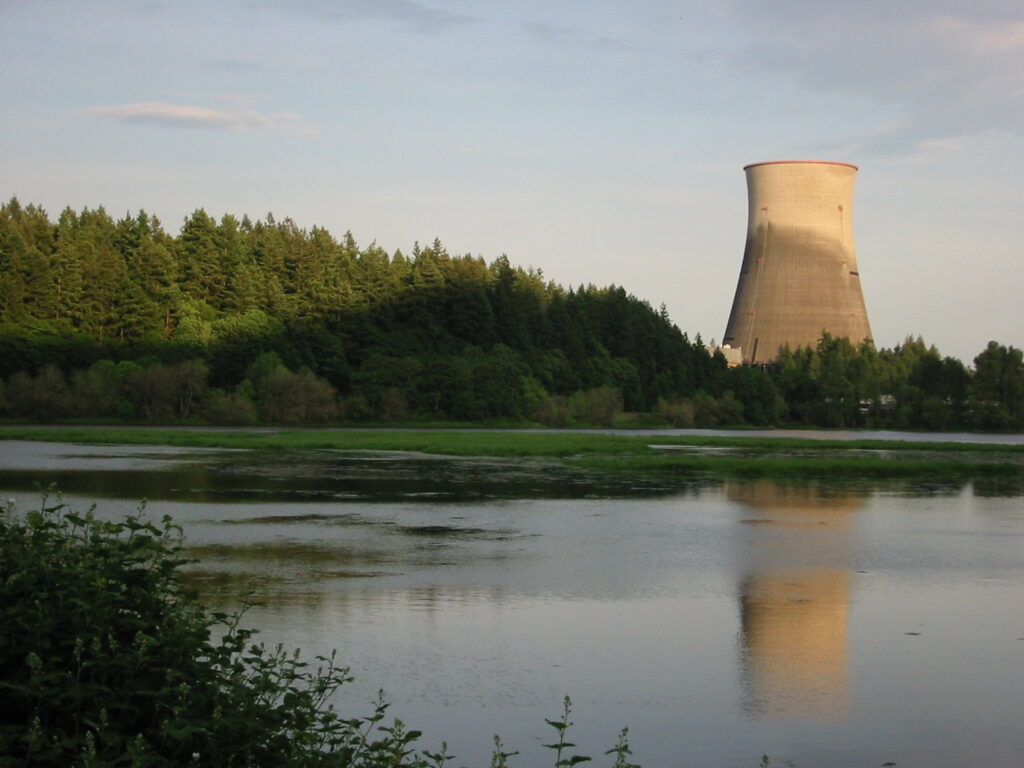
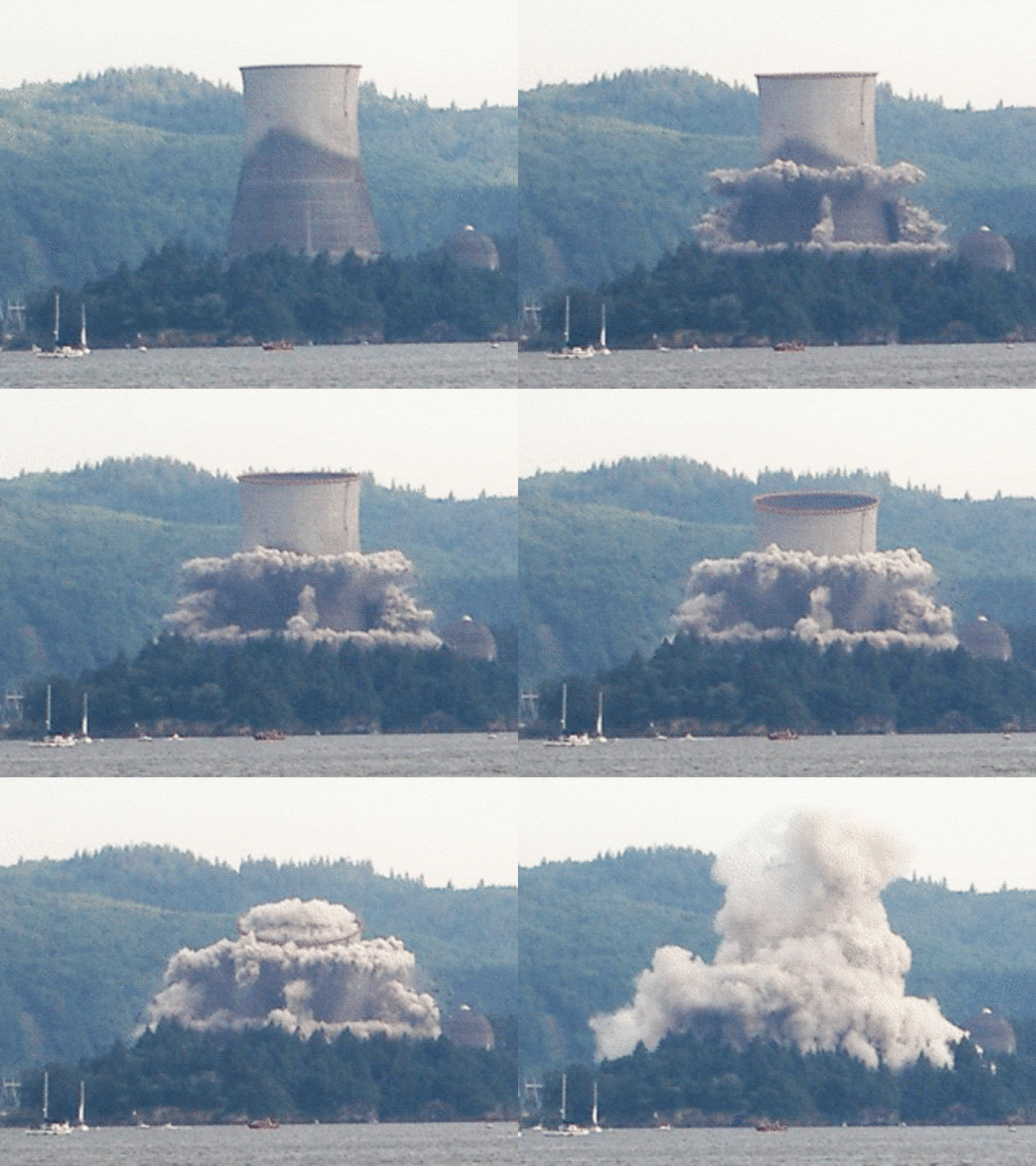
Alan Journet of Southern Oregon Climate Action Now views SMRs as a distraction at best and a dangerous political project at worst.
Aside from the immediate risks of SMRs come the longer-term challenges within nuclear waste management. “There would have to be a demonstrated and credible mechanism for disposing of the waste,” said Alan Journet of Southern Oregon Climate Action Now. Journet, an ecologist by training and climate organizer by calling, didn’t mince words in a recent interview. Journet views SMRs as a distraction at best and a dangerous political project at worst.
Journet’s concern isn’t hypothetical. In Oregon, where nuclear skepticism runs deep, he views the push for SMRs as largely disconnected from real climate solutions. “I don’t see nuclear energy as a climate solution in any way,” he said. “But I’m aware that some environmental and climate advocates have been persuaded that the nuclear industry—through these undemonstrated and still experimental SMRs—might have a role to play.” To Journet, the legislative momentum behind SMRs seems less about addressing urgent climate needs and more about advancing technology that remains unproven.
At the heart of his critique is the SMR trade-off offered to rural communities: economic development in exchange for hosting radioactive waste and bearing the environmental burden, including water depletion, land disruption, and long-term contamination risks. “I don’t deny that the massively energy-intensive AI and data centers could have a positive impact on the local economy of areas where they are located,” says Journet, “but as always, the question is at what cost?” Not to mention the corollary questions – who pays that cost, and who decides if it’s worth it.
For communities like Kemmerer, accepting these trade-offs may seem practical in the short term. Still, Journet believes the real challenge is the long-term commitment: obligating themselves to nuclear waste storage in perpetuity amidst safety concerns.
The path forward for SMRs
Even though the U.S. Under Secretary for Arms Control and International Security Ambassador Bonnie Jenkins argued in an August 2023 speech that SMRs could “play a critical role in decarbonizing hard-to-abate sectors beyond electricity, such as industrial process heat, clean hydrogen production, and water desalination,” while touting their “advanced safety features,” their future remains deeply uncertain. Whether these benefits materialize depends on clearing a gauntlet of regulatory, technical, economic, and community hurdles.
Long-term reactor safety and reliability depend on continued improvements in metallurgy and engineering that can withstand extreme heat, pressure, and chemical exposure.
John Jackson, the National Technical Director for the Microreactor Research and Development program at Energy Department’s Office of Nuclear Energy said that the remaining obstacles to SMRs include perfecting the technology. Long-term reactor safety and reliability depend on continued improvements in metallurgy and engineering that can withstand extreme heat, pressure, and chemical exposure.
That said, another significant challenge isn’t technological but regulatory. “Getting the first [operating SMR] licensed” remains the bottleneck, Jackson said. Current licensing rules primarily target large light-water reactors – the configuration used by every U.S. nuclear power plant to date, not molten salt or gas-cooled designs. Forcing new reactors into outdated regulatory frameworks slows progress and stifles innovation. Unless the NRC adapts, deployment will remain stalled.
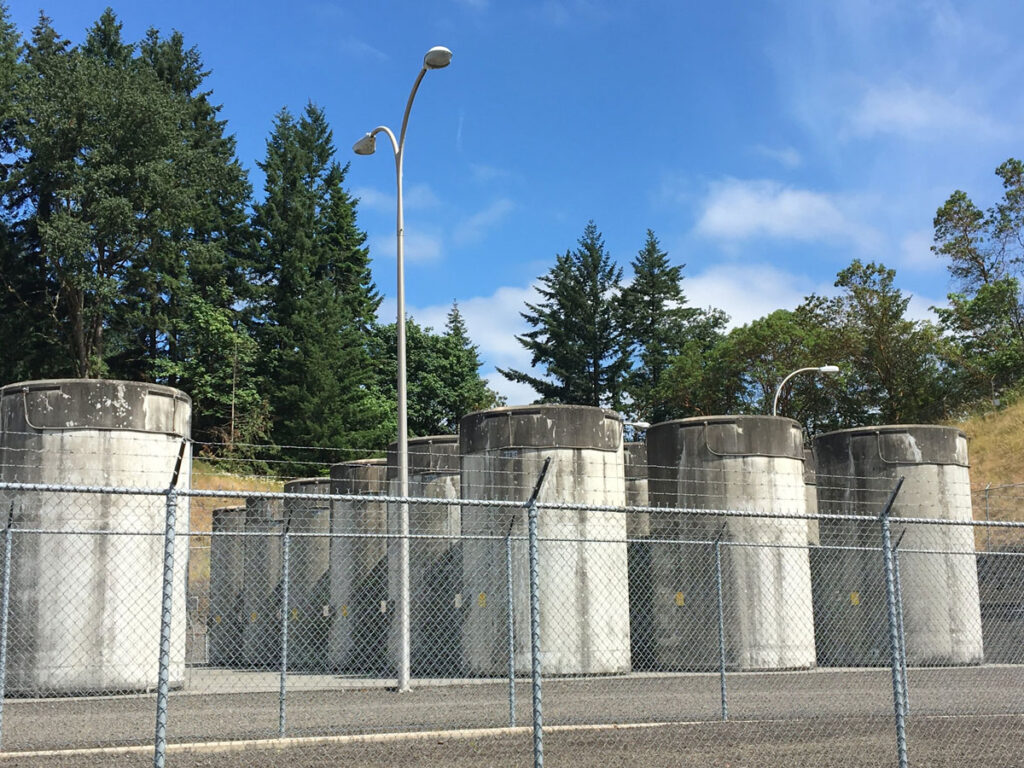
And there is always the question of nuclear waste. Without a permanent federal repository, that waste is likely to remain where it’s generated. As Journet notes, this poses a disproportionate burden on rural communities. In Oregon, nuclear skepticism has long shaped state policy. A 1980 voter-approved law bars new reactors unless a permanent waste disposal solution exists. A recent bill, SB 997, seeks to exempt small modular reactors from that requirement, a move critics view as undermining public safety protections, while supporters see it as modernizing outdated restrictions.
Ultimately, it is public confidence that will determine if SMRs succeed economically. That requires transparency and considerable efficiency gains to build investor confidence. “There’s absolutely no substitute for seeing it in operation,” Jackson said, pointing to the MARVEL microreactor under construction at Idaho National Laboratory. For communities wary of nuclear power, demonstration rather than persuasion may be the only way to build trust. As Jackson put it, “Let people see that it’s not a threat.”

Edited by Felicity Barringer and Geoff McGhee.
What’s the energy emergency? To an administration keen on fossil fuels, it may be the threat of alternatives
The Energy Department has repeatedly invoked emergency powers to stop the closure of coal plants around the U.S. and reopen oil pipelines in the West. As court challenges inch forward, utilities and energy companies are dusting off equipment that was headed for the scrap heap.

Atomic energy, out of a box? In the rural West, an experimental reactor technology inches closer to reality.
Backers say Small Modular Reactors promise safe, cheap, carbon-free energy. But as is common in nuclear power, the reality is more complicated. The small city of Kemmerer, Wyoming, is set to house the first U.S. commercial-scale SMR demonstration.
In the shadow of wind and solar, geothermal energy gets a fresh look
New technologies and spiking power demand are drawing attention to the Ring of Fire beneath us.
Transmission, transmission, transmission
What it takes to put renewable power on the West’s electrical grids.

’Despair and complacency are equally unwarranted:’ Q&A with Amory Lovins, energy visionary
Amory Lovins, a physicist who co-founded RMI (formerly called Rocky Mountain Institute), is a half-time adjunct professor of Civil and Environmental Engineering at Stanford and a visiting scholar at the Precourt Institute for Energy.

Weighing the consequences of losing carbon-free energy in California
Billions in potential federal dollars have led Gov. Gavin Newsom to pause the decommissioning of the Diablo Canyon nuclear plant — source of one sixth of the state’s green energy.






















One reply on “Atomic energy, out of a box? In the rural West, an experimental reactor technology inches closer to reality.”
[…] small modular reactors as a cheaper, cleaner version of large nuclear power plants. Scientists critical of this alternative, including Mann, say they’re unreliable, still come with serious safety risks […]